English
 Español
 tiếng việt
 русский
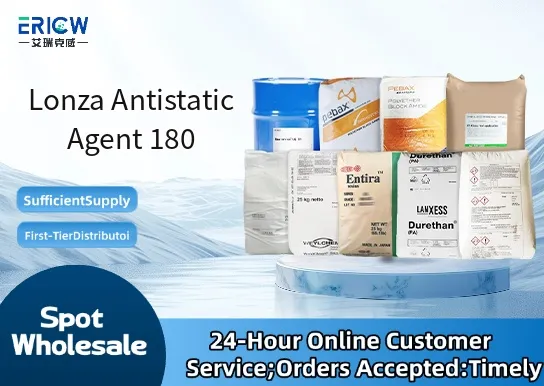
Highly effective, internally migrating antistatic performance in polyolefin and engineering thermoplastic compounds.
Excellent thermal stability up to 260 °C, suitable for demanding processing conditions including injection molding and extrusion.
Low volatility and minimal plate-out, ensuring consistent surface resistivity and clean production runs.
Compatible with common additives such as UV stabilizers, flame retardants, and pigments without adverse interactions.
Compliant with major food-contact regulations (EU 10/2011, FDA 21 CFR §178.3710) for approved applications.
Automotive interior components (e.g., trim, dashboards, air vents) requiring static dissipation and dust resistance.
Packaging films and containers for electronics, pharmaceuticals, and sensitive dry goods.
Medical device housings and diagnostic equipment enclosures where electrostatic discharge (ESD) control is critical.
Industrial conveyor parts, rollers, and handling trays used in cleanroom or low-dust environments.
Household appliance casings (e.g., vacuum cleaners, power tools) to prevent static shock and particulate attraction.
| Chemical Type | Glycerol ester-based, non-ionic antistatic agent |
| Product Form | Pellets |
| Appearance | Off-white to light beige free-flowing pellets |
| Primary Applications | Polypropylene (PP), polyethylene (PE), ABS, PC/ABS blends |
| Key Features | Internally migrating, low-migration, heat-stable, low-odor |
| Benefits | Reduces surface resistivity to 10⁹–10¹¹ Ω/sq; improves processability and end-product aesthetics |
| Recommended Dosage | 0.5–2.0 wt% depending on polymer and performance requirements |
| Storage Conditions | Store in original sealed packaging at 15–25 °C, protect from moisture and direct sunlight |
Contact With Us:
E-mail: wangxingqiang@ericwchem.com
Have a Questions? Call Us:
Add:
Building A1, Jiete Industrial Park, Huangpu District, Guangzhou City, Guangdong Province, China