English
 Español
 tiếng việt
 русский
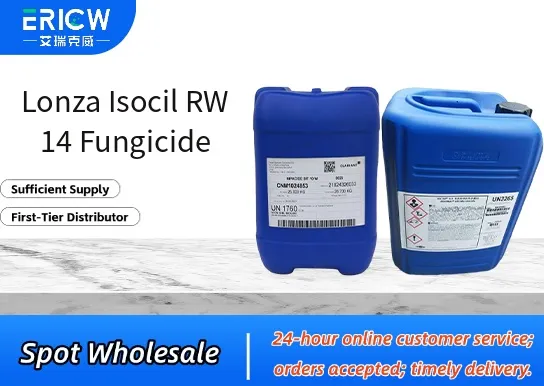
Broad-spectrum efficacy against key fungal contaminants including Aspergillus, Penicillium, and Cladosporium species.
Stable in aqueous systems across a wide pH range (pH 4–10), ensuring compatibility with diverse industrial formulations.
Low volatility and non-vaporizing under ambient conditions, supporting safe handling and reduced inhalation risk.
Compatible with common polymers, surfactants, and water-based coatings without compromising performance or stability.
Designed for low-dose efficacy—effective at concentrations as low as 0.05–0.2% w/w in finished products.
Preservation of water-based architectural paints and interior wall coatings.
Protection of industrial adhesives and sealants during storage and application.
Stabilization of construction mortars and grouts against mold colonization in humid environments.
Microbiological control in gypsum-based building materials and plasterboard primers.
Long-term antifungal protection in decorative ceiling tiles and acoustic panels.
| Chemical Type | Isothiazolinone-based biocide (mixture of 5-chloro-2-methyl-4-isothiazolin-3-one and 2-methyl-4-isothiazolin-3-one) |
| Product Form | Aqueous solution |
| Appearance | Clear, pale yellow liquid |
| pH (1% aqueous solution) | 2.5–4.5 |
| Density (20°C) | 1.08–1.12 g/cm³ |
| Solubility | Completely miscible with water |
| Primary Applications | Industrial preservation of water-based building materials and coatings |
| Key Features | Non-oxidizing, non-leaching, and compatible with ISO 14001-compliant manufacturing processes |
Q1: What is the primary mode of action of Lonza Isocil RW 14 Fungicide?
A: Lonza Isocil RW 14 functions as a broad-spectrum fungicide through inhibition of microbial cell membrane synthesis and disruption of essential metabolic pathways in susceptible fungi and yeasts. Its active ingredient provides reliable protection against spoilage organisms commonly encountered in industrial water systems and non-food-contact polymer formulations.
Q2: In which types of industrial systems is Lonza Isocil RW 14 typically applied?
A: It is widely used in recirculating cooling water systems, metalworking fluids, latex emulsions, adhesives, and water-based coatings—particularly where long-term microbial stability and resistance to biodegradation are critical. It is not intended for food-contact or pharmaceutical applications unless explicitly approved under applicable regulatory frameworks.
Q3: How should Lonza Isocil RW 14 be dosed in a formulation or system?
A: Dosage depends on formulation requirements, system conditions, and target microorganisms. It is typically used at low concentrations, generally ranging from 0.1% to 2% by weight in finished products, with initial shock treatments often followed by maintenance dosing based on regular microbiological monitoring.
Q4: Is Lonza Isocil RW 14 compatible with common water treatment additives and surfactants?
A: Yes, it demonstrates good compatibility with many oxidizing and non-oxidizing biocides, corrosion inhibitors, scale inhibitors, and anionic/cationic surfactants when used within recommended pH and temperature ranges. Compatibility testing under actual system conditions is always advised prior to full-scale implementation.
Q5: What safety and handling precautions should be observed?
A: As with all industrial biocides, appropriate personal protective equipment—including gloves, goggles, and respiratory protection during handling of concentrated product—is recommended. Refer to the Safety Data Sheet (SDS) for detailed toxicological information, first-aid measures, and disposal guidance. Avoid direct skin contact and inhalation of mists or vapors.
Contact With Us:
E-mail: wangxingqiang@ericwchem.com
Have a Questions? Call Us:
Add:
Building A1, Jiete Industrial Park, Huangpu District, Guangzhou City, Guangdong Province, China