English
 Español
 tiếng việt
 русский
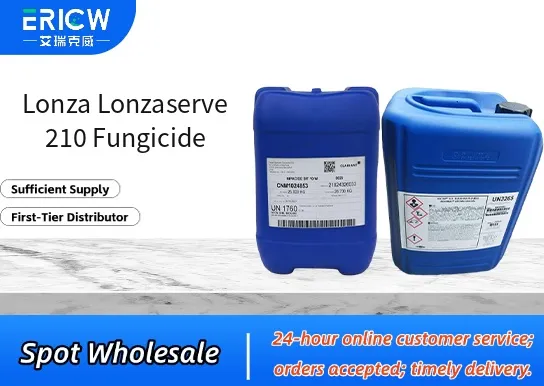
Broad-spectrum fungicidal activity against key spoilage fungi including Aspergillus, Penicillium, and Cladosporium.
Stable across a wide pH range (pH 3–10), ensuring compatibility with diverse formulation matrices.
Low volatility and non-volatile active ingredients, supporting safe handling and minimal odor impact.
Designed for long-term preservation efficacy in water-based industrial systems without compromising product integrity.
Compliant with major global regulatory frameworks for industrial biocides, including EU BPR and US EPA guidelines.
Preservation of water-based paints and coatings during storage and application.
Protection of adhesives and sealants against fungal degradation in manufacturing and end-use environments.
Stabilization of construction chemicals such as grouts, mortars, and cementitious slurries.
Maintenance of microbial integrity in metalworking fluids and industrial coolants.
Prevention of mold growth in textile and leather processing auxiliaries.
| Chemical Type | Isothiazolinone-based biocide blend |
| Product Form | Clear to slightly hazy aqueous solution |
| Appearance | Colorless to pale yellow liquid |
| pH (1% aqueous solution) | 3.5 – 5.5 |
| Density (20°C) | 1.02 – 1.06 g/cm³ |
| Solubility | Completely miscible with water |
| Primary Applications | Industrial preservative for water-based formulations |
| Key Features | Fungal control, low toxicity profile, thermal stability up to 60°C |
Q1: What is the primary mode of action of Lonza Lonzaserve 210 Fungicide?
A: Lonza Lonzaserve 210 functions as a broad-spectrum, preventive and curative fungicide, primarily inhibiting fungal cell wall synthesis and disrupting membrane integrity. Its active ingredient delivers reliable control against common saprophytic and spoilage fungi in industrial water systems and non-food-contact applications.
Q2: In which types of industrial systems is Lonzaserve 210 typically applied?
A: It is commonly used in recirculating cooling water systems, process water loops, paper mill white water systems, and other non-potable industrial water applications where microbial growth poses risks to system efficiency, material integrity, or product quality. It is not intended for food, beverage, or pharmaceutical manufacturing contact surfaces.
Q3: How is Lonzaserve 210 typically dosed and monitored in practice?
A: Dosage is adjusted based on system dynamics—including water temperature, nutrient load, and microbial challenge—and generally ranges from 0.1% to 2% by weight in the treatment solution. Continuous or intermittent feeding is recommended, with regular microbiological monitoring (e.g., heterotrophic plate counts) guiding dose optimization.
Q4: Is Lonzaserve 210 compatible with common water treatment additives?
A: Yes, it demonstrates good compatibility with many corrosion inhibitors, scale inhibitors, and other biocides used in industrial water treatment programs. However, compatibility testing under actual system conditions is recommended before full-scale integration, especially when co-dosing with oxidizing biocides or highly alkaline formulations.
Q5: What safety and handling considerations apply during storage and use?
A: Lonzaserve 210 should be stored in its original container in a cool, dry, well-ventilated area away from direct sunlight and incompatible materials. Personal protective equipment—including chemical-resistant gloves, safety goggles, and appropriate respiratory protection when handling concentrated product—is recommended. Always consult the Safety Data Sheet (SDS) for detailed handling, first-aid, and disposal guidance.
Contact With Us:
E-mail: wangxingqiang@ericwchem.com
Have a Questions? Call Us:
Add:
Building A1, Jiete Industrial Park, Huangpu District, Guangzhou City, Guangdong Province, China