English
 Español
 tiếng việt
 русский
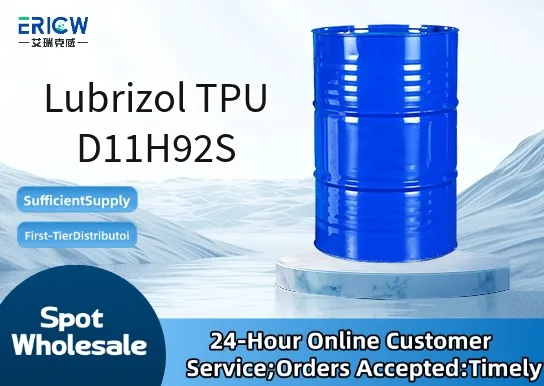
Excellent melt processability for efficient extrusion and injection molding
High abrasion resistance suitable for demanding mechanical environments
Good low-temperature flexibility down to –40 °C
Outstanding clarity and colorability for aesthetic-sensitive applications
Hydrolysis-resistant aliphatic polyester-based thermoplastic polyurethane
Medical tubing and fluid delivery systems
Wearable device components and skin-contact interfaces
High-clarity protective films and optical overlays
Precision extruded profiles for automotive interior trim
Food-contact compliant packaging seals and gaskets
| Chemical Type | Aliphatic polyester-based thermoplastic polyurethane |
| Product Form | Pellets |
| Appearance | Translucent, off-white to light amber pellets |
| Primary Applications | Medical devices, wearables, optical films, automotive interiors |
| Key Features | Melt-processable, hydrolysis-resistant, low-temperature flexible, optically clear |
| Benefits | Regulatory-ready (USP Class VI, ISO 10993-compliant), consistent batch-to-batch performance, excellent surface finish |
| Processing Method | Extrusion, injection molding, blow molding |
| Shelf Life | 24 months from date of manufacture when stored in original unopened packaging at <25 °C and <50% RH |
Q1: What is the primary function of Lubrizol TPU D11H92S in thermoplastic polyurethane (TPU) formulations?
A: Lubrizol TPU D11H92S is a high-performance processing aid and surface modifier designed to improve melt flow, reduce extrusion torque, and enhance surface gloss and slip characteristics in TPU compounds—without compromising mechanical integrity or thermal stability.
Q2: Is Lubrizol TPU D11H92S compatible with all common TPU chemistries (e.g., polyester-, polyether-, and polycaprolactone-based TPUs)?
A: Yes, it demonstrates broad compatibility across major TPU families. It is especially effective in polyester- and polyether-based TPUs, where it helps mitigate melt viscosity variations and improves consistency during high-speed extrusion and injection molding.
Q3: How is Lubrizol TPU D11H92S typically incorporated into TPU production?
A: It is commonly added during compounding—either pre-blended with TPU pellets or metered directly into the extruder feed throat. Due to its solid pellet form and thermal stability, it disperses readily under standard TPU processing conditions without requiring solvent or pre-dilution.
Q4: Does Lubrizol TPU D11H92S affect the regulatory compliance status of finished TPU parts?
A: Lubrizol TPU D11H92S is formulated for use in applications where regulatory compliance may be required, such as food-contact or medical devices. However, final compliance depends on the full formulation, processing conditions, and end-use requirements—users should validate suitability per applicable regional regulations and intended application.
Contact With Us:
E-mail: wangxingqiang@ericwchem.com
Have a Questions? Call Us:
Add:
Building A1, Jiete Industrial Park, Huangpu District, Guangzhou City, Guangdong Province, China