English
 Español
 tiếng việt
 русский
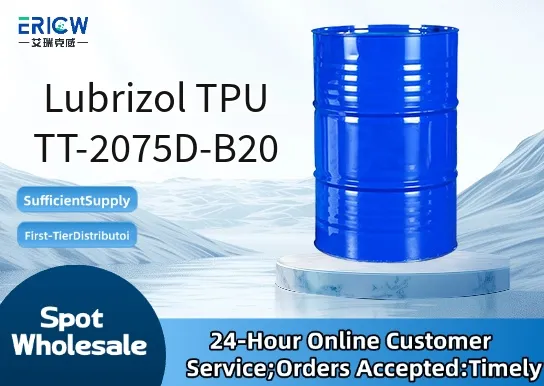
Excellent low-temperature flexibility down to –40 °C
High abrasion and cut resistance for demanding mechanical environments
Good hydrolytic stability suitable for humid or wet-condition applications
Excellent melt processability via extrusion, injection molding, and blow molding
Compatible with common TPU processing equipment and standard drying protocols
Industrial hoses and fluid conveyance tubing
Automotive interior trim and soft-touch components
Wear-resistant footwear midsoles and outsoles
Flexible medical tubing requiring biocompatibility support
Protective gear and technical apparel membranes
| Chemical Type | Aliphatic polyester-based thermoplastic polyurethane |
| Product Form | Pellets |
| Appearance | Off-white to light tan, free-flowing granules |
| Primary Applications | Extruded profiles, molded parts, coextrusions |
| Key Features | Low-temperature toughness, hydrolysis resistance, processing versatility |
| Benefits | Reduced part failure in cold/wet environments; consistent output in high-speed lines |
| Drying Recommendation | 80–90 °C for 2–4 hours (desiccant dryer) |
| Processing Temperature Range | 180–210 °C (melt temperature) |
Q1: What is the primary function of Lubrizol TPU TT-2075D-B20 in thermoplastic polyurethane (TPU) formulations?
A: Lubrizol TPU TT-2075D-B20 is a high-performance processing aid and melt flow modifier specifically designed to enhance extrudability, reduce melt viscosity, and improve surface finish in TPU compounds—without compromising mechanical properties or thermal stability.
Q2: Is TT-2075D-B20 compatible with aromatic and aliphatic TPU grades?
A: Yes, TT-2075D-B20 demonstrates broad compatibility across both aromatic and aliphatic TPU base resins, supporting consistent performance in diverse processing conditions including extrusion, injection molding, and calendering.
Q3: How should TT-2075D-B20 be incorporated into TPU formulations?
A: It is typically introduced during compounding—either pre-blended with TPU pellets or added directly to the extruder feed throat. Uniform dispersion is readily achieved under standard melt processing conditions; no pre-drying is required beyond standard TPU handling practices.
Q4: Does TT-2075D-B20 affect the clarity or color stability of transparent TPU products?
A: When used at recommended dosage levels, TT-2075D-B20 maintains excellent optical clarity and shows minimal impact on yellowness index (YI) during processing and aging—making it suitable for demanding transparent and light-colored TPU applications.
Contact With Us:
E-mail: wangxingqiang@ericwchem.com
Have a Questions? Call Us:
Add:
Building A1, Jiete Industrial Park, Huangpu District, Guangzhou City, Guangdong Province, China