English
 Español
 tiếng việt
 русский
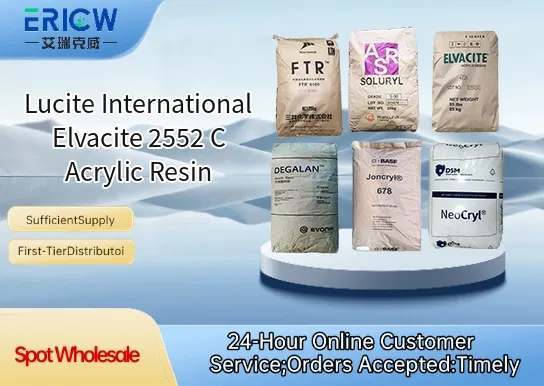
High molecular weight methyl methacrylate (MMA) homopolymer offering excellent mechanical strength and rigidity.
Optimized for solvent-based coatings with balanced solubility in common ketones, esters, and aromatic hydrocarbons.
Provides outstanding clarity, UV stability, and long-term gloss retention in demanding outdoor applications.
Low volatile organic compound (VOC) contribution when formulated into compliant industrial coating systems.
Consistent batch-to-batch performance ensured through Lucite International’s stringent quality control and polymerization process control.
Automotive clearcoats and OEM topcoats requiring high durability and optical clarity.
Industrial maintenance coatings for metal substrates exposed to harsh environmental conditions.
Architectural coatings including high-performance façade and cladding finishes.
Plastic coatings for ABS, PC, and other engineering thermoplastics requiring adhesion and mar resistance.
Specialty inks for durable exterior signage and traffic marking applications.
| Chemical Type | Methyl methacrylate homopolymer |
| Product Form | Free-flowing white granular solid |
| Appearance | White, free-flowing granules |
| Primary Applications | Solvent-borne high-performance coatings |
| Key Features | High hardness, excellent clarity, UV resistance |
| Benefits | Enhanced film integrity, reduced yellowing, formulation flexibility |
| Solubility | Soluble in acetone, MEK, toluene, xylene, and ethyl acetate |
| Storage Conditions | Store in cool, dry, well-ventilated area; protect from moisture and direct sunlight |
Q1: What is the primary function of Elvacite 2552 C in coating formulations?
A: Elvacite 2552 C is a solvent-soluble, low-molecular-weight acrylic resin primarily used as a film-forming binder and rheology modifier in high-gloss decorative and industrial coatings. It enhances clarity, hardness, and solvent release while supporting excellent flow and leveling.
Q2: Is Elvacite 2552 C compatible with common organic solvents and other resin systems?
A: Yes — it exhibits broad compatibility with aromatic and aliphatic hydrocarbons, ketones, esters, and alcohols. It is also commonly blended with cellulose derivatives, alkyds, and other acrylic resins to tailor performance without risking phase separation or haze formation under standard formulation conditions.
Q3: How does Elvacite 2552 C contribute to gloss and surface appearance in finished films?
A: Its low molecular weight and narrow molecular weight distribution promote rapid solvent evaporation and uniform film coalescence, resulting in exceptional surface smoothness and high specular gloss — especially in clear coats and metallic basecoats where optical clarity is critical.
Q4: Can Elvacite 2552 C be used in food-contact or pharmaceutical-related applications?
A: Elvacite 2552 C is not specifically designed or certified for direct food-contact or pharmaceutical use. While it may be considered for certain indirect applications (e.g., packaging overprint varnishes), end-use compliance must be evaluated case-by-case by the formulator against applicable regulatory requirements and migration testing protocols.
Contact With Us:
E-mail: wangxingqiang@ericwchem.com
Have a Questions? Call Us:
Add:
Building A1, Jiete Industrial Park, Huangpu District, Guangzhou City, Guangdong Province, China