English
 Español
 tiếng việt
 русский
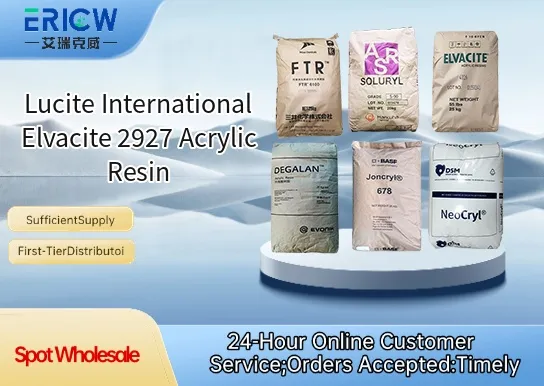
High molecular weight methyl methacrylate (MMA) homopolymer offering excellent clarity and UV stability.
Optimized solution viscosity for consistent sprayability and film formation in coating applications.
Superior weather resistance and long-term gloss retention under outdoor exposure.
Low yellowing tendency, maintaining optical purity over extended service life.
Compatible with common organic solvents including acetone, methyl ethyl ketone (MEK), and toluene.
Automotive clearcoats and OEM topcoats requiring high-gloss, durable finishes.
Architectural and industrial maintenance coatings for metal and concrete substrates.
Plastic coatings for ABS and polycarbonate parts in consumer electronics and appliances.
Specialty inks for high-performance screen and gravure printing on rigid substrates.
Clear protective topcoats for signage, lighting diffusers, and decorative laminates.
| Chemical Type | Methyl methacrylate homopolymer |
| Product Form | White granular solid |
| Appearance | Free-flowing, non-dusty granules |
| Primary Applications | High-performance solvent-borne coatings and inks |
| Key Features | High clarity, UV resistance, low yellowing, good solubility |
| Recommended Solvents | Acetone, MEK, toluene, xylene, ethyl acetate |
| Typical K-value (1% in chloroform) | ~60–65 |
| Storage Conditions | Store in cool, dry, well-ventilated area; avoid moisture and direct sunlight |
Q1: What is the primary function of Elvacite 2927 in coating formulations?
A: Elvacite 2927 is a medium-molecular-weight, solution-grade acrylic resin designed primarily as a film-forming binder and rheology modifier in solvent-based industrial coatings, including metal decorating inks and protective topcoats. It contributes clarity, gloss retention, and good substrate adhesion while enabling formulation flexibility.
Q2: Is Elvacite 2927 suitable for food-contact applications?
A: Elvacite 2927 is not pre-approved for direct food-contact use. Its suitability for such applications depends on full regulatory evaluation by the formulator—including migration assessment, end-use conditions, and compliance with applicable regional food contact regulations. Users must conduct their own due diligence and obtain necessary authorizations.
Q3: Which solvents are commonly used to dissolve Elvacite 2927?
A: Elvacite 2927 dissolves readily in common organic solvents such as methyl ethyl ketone (MEK), methyl isobutyl ketone (MIBK), toluene, xylene, and ester blends. Solvent selection should consider evaporation rate, compatibility with other formulation components, and VOC compliance requirements.
Q4: How does Elvacite 2927 compare to other Elvacite resins in terms of molecular weight and solution viscosity?
A: Elvacite 2927 exhibits a medium molecular weight relative to the broader Elvacite portfolio—higher than low-MW grades like 2041 (used for high-solids, low-viscosity systems) but lower than high-MW grades like 2021 (used for enhanced toughness and melt viscosity). This balance supports good flow and leveling without excessive solution viscosity at typical solids levels.
Contact With Us:
E-mail: wangxingqiang@ericwchem.com
Have a Questions? Call Us:
Add:
Building A1, Jiete Industrial Park, Huangpu District, Guangzhou City, Guangdong Province, China