English
 Español
 tiếng việt
 русский
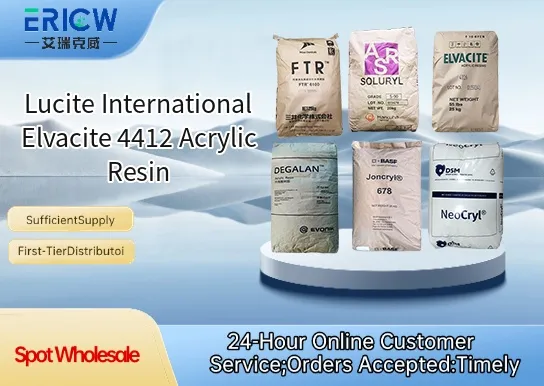
High molecular weight acrylic resin offering excellent mechanical strength and rigidity.
Superior UV stability and long-term weatherability for outdoor applications.
Excellent clarity and color stability with low yellowness index (YI).
Good solution viscosity profile enabling easy handling in solvent-based coating and ink systems.
Consistent batch-to-batch reproducibility meeting stringent quality control standards.
Automotive clearcoats and OEM topcoats.
Industrial maintenance coatings for metal and plastic substrates.
High-performance graphic inks and screen printing formulations.
Architectural coatings requiring durability and gloss retention.
Electronics enclosures and decorative plastic finishes.
| Chemical Type | Methacrylate-based copolymer |
| Product Form | Free-flowing granular solid |
| Appearance | White to off-white pellets |
| Primary Applications | Solvent-based coatings, inks, and specialty finishes |
| Key Features | High hardness, UV resistance, optical clarity |
| Benefits | Enhanced gloss retention, reduced chalking, improved film integrity |
| Solubility | Soluble in common organic solvents (e.g., xylene, MEK, acetone) |
| Storage Condition | Store in cool, dry place below 30°C; protect from moisture |
Q1: What is the primary function of Elvacite 4412 in coating formulations?
A: Elvacite 4412 is a solution-grade methyl methacrylate-based acrylic resin designed to serve as a film-forming binder and rheology modifier in solvent-borne industrial coatings, particularly where high clarity, UV stability, and gloss retention are required.
Q2: Is Elvacite 4412 compatible with common organic solvents used in industrial coatings?
A: Yes — Elvacite 4412 exhibits good solubility in typical coating solvents including aromatic hydrocarbons (e.g., xylene), ketones (e.g., MEK, MIBK), and esters (e.g., butyl acetate), enabling straightforward integration into conventional solvent-based systems.
Q3: How does Elvacite 4412 contribute to the performance of overprint varnishes and specialty finishes?
A: It enhances surface hardness, mar resistance, and optical clarity while maintaining flexibility and adhesion on diverse substrates such as paperboard, metalized films, and printed plastics — making it well-suited for high-performance overprint varnishes and protective topcoats.
Q4: Can Elvacite 4412 be blended with other resins or crosslinkers?
A: Yes — Elvacite 4412 is commonly blended with alkyds, polyesters, and amino resins (e.g., melamine-formaldehyde) to tailor cure speed, hardness development, and chemical resistance, though compatibility testing under intended processing conditions is recommended.
Contact With Us:
E-mail: wangxingqiang@ericwchem.com
Have a Questions? Call Us:
Add:
Building A1, Jiete Industrial Park, Huangpu District, Guangzhou City, Guangdong Province, China