English
 Español
 tiếng việt
 русский
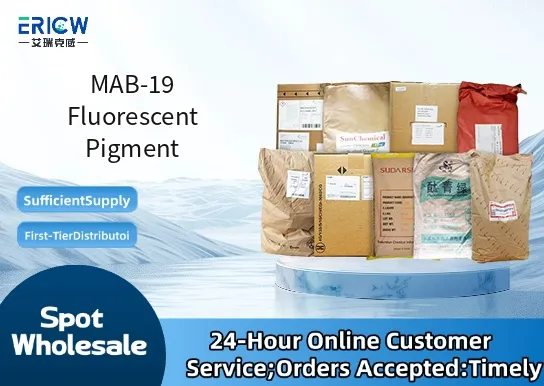
High-intensity fluorescence under UV-A (365 nm) and visible blue light excitation.
Excellent thermal stability up to 220°C, suitable for high-temperature processing.
Good dispersion stability in polar and non-polar polymer matrices including ABS, PS, and PET.
Low migration tendency in plasticized PVC and flexible films.
Compliant with REACH Annex XVII and free of heavy metals (Pb, Cd, Hg, Cr⁶⁺).
Security printing in banknotes, ID cards, and tax stamps.
Fluorescent markers and safety signage for industrial and public environments.
UV-responsive inks for packaging authentication and anti-counterfeiting labels.
Functional colorants in engineering plastics for automotive interior trim components.
Special-effect pigments in cosmetic packaging and premium consumer electronics housings.
| Chemical Type | Organic fluorescent dye derivative (benzoxazole-based) |
| Product Form | Free-flowing fine powder |
| Appearance | Yellow-green crystalline powder |
| Primary Applications | Plastics, inks, coatings, and security materials |
| Key Features | UV-excitable fluorescence, heat-stable, low volatility |
| Benefits | Enhanced optical contrast, batch-to-batch consistency, easy integration into masterbatches |
| Storage Conditions | Keep in original sealed container at 15–25°C, protect from moisture and direct sunlight |
| Shelf Life | 24 months from date of manufacture under recommended storage |
Q1: What types of polymer systems is MAB-19 compatible with?
A: MAB-19 is formulated for compatibility with a broad range of thermoplastics and thermosets, including polyolefins (PP, PE), ABS, PS, PVC, and certain engineering resins. Performance may vary depending on processing temperature and resin polarity, so preliminary compatibility testing is recommended.
Q2: How does MAB-19 perform under UV exposure and outdoor weathering?
A: MAB-19 exhibits enhanced photostability compared to conventional fluorescent pigments, retaining strong chromatic intensity after moderate UV exposure. For extended outdoor applications, co-stabilization with HALS or UV absorbers is advised to maximize longevity.
Q3: Is MAB-19 suitable for food-contact or medical-grade applications?
A: MAB-19 is not pre-approved for direct food-contact or implantable medical use. It may be considered for non-intended-contact packaging or external device housings, subject to full regulatory assessment by the end-user in accordance with applicable regional requirements.
Q4: What is the typical dosage range for optimal fluorescence in plastic compounds?
A: Optimal loading generally ranges from 0.1% to 2% by weight, depending on base resin transparency, desired intensity, and processing conditions. Lower concentrations often suffice for thin-walled parts or high-clarity applications, while higher loadings may be needed for opaque or heavily filled systems.
Contact With Us:
E-mail: wangxingqiang@ericwchem.com
Have a Questions? Call Us:
Add:
Building A1, Jiete Industrial Park, Huangpu District, Guangzhou City, Guangdong Province, China