English
 Español
 tiếng việt
 русский
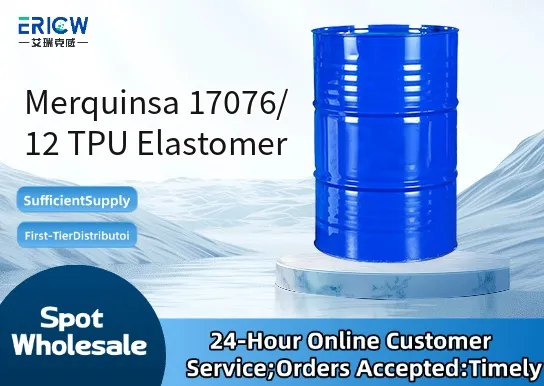
Excellent abrasion resistance for demanding mechanical service conditions.
High transparency and optical clarity suitable for premium aesthetic applications.
Good hydrolytic stability, maintaining performance in humid or moisture-exposed environments.
Outstanding elasticity and recovery after repeated deformation.
Compatible with common thermoplastic processing methods including extrusion, injection molding, and blow molding.
Transparent protective films for electronic displays and touch panels.
Soft-touch overmolding for consumer electronics housings and automotive interior trim.
Flexible medical tubing requiring biocompatibility and kink resistance.
High-clarity seals and gaskets for optical enclosures and lighting systems.
Precision extruded profiles for architectural glazing and solar panel edge protection.
| Chemical Type | Aliphatic polyester-based thermoplastic polyurethane (TPU) |
| Product Form | Pellets |
| Appearance | Translucent, free-flowing granules |
| Primary Applications | Transparent elastomeric components, soft-touch overmolding, precision extrusion |
| Key Features | High clarity, low yellowness index, excellent UV stability |
| Processing Temperature Range | 180–210 °C (recommended melt temperature) |
| Density | 1.18–1.20 g/cm³ |
| Hardness (Shore A) | 76 ± 2 |
Q1: What is the primary application domain for Merquinsa 17076/12?
A: Merquinsa 17076/12 is a thermoplastic polyurethane (TPU) elastomer engineered for demanding flexible packaging applications—particularly in multilayer coextruded films where high clarity, excellent melt processability, and strong interlayer adhesion are required.
Q2: Is this TPU suitable for food-contact applications?
A: Yes, Merquinsa 17076/12 is formulated to meet general food-contact compliance requirements for plastics under relevant global regulatory frameworks; final suitability depends on the complete finished article composition and intended use conditions.
Q3: How does Merquinsa 17076/12 differ from standard TPU grades used in extrusion?
A: Unlike conventional TPUs, 17076/12 offers enhanced low-melt-viscosity behavior and improved thermal stability during prolonged melt processing—making it especially well-suited for high-output film coextrusion lines and thin-gauge barrier layers.
Q4: Can it be blended with other polymers such as EVOH or PE?
A: Yes, Merquinsa 17076/12 demonstrates good compatibility with common packaging resins including polyethylene (PE), ethylene-vinyl alcohol (EVOH), and ionomers—typically used at low concentrations as a tie-layer modifier to improve adhesion and reduce delamination risk.
Contact With Us:
E-mail: wangxingqiang@ericwchem.com
Have a Questions? Call Us:
Add:
Building A1, Jiete Industrial Park, Huangpu District, Guangzhou City, Guangdong Province, China