English
 Español
 tiếng việt
 русский
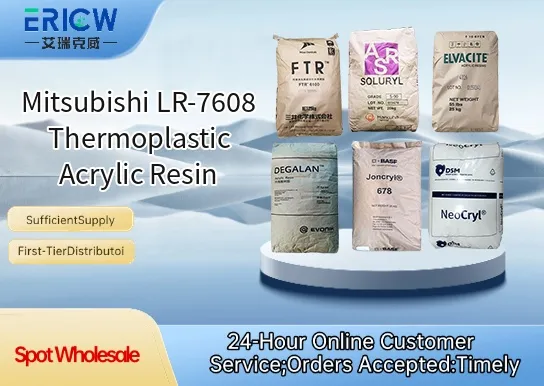
Excellent transparency and UV resistance for long-term outdoor durability.
High melt flow index enabling efficient extrusion and injection molding processing.
Good thermal stability with minimal degradation up to 220°C.
Low moisture absorption ensuring dimensional stability in humid environments.
Compatible with common plasticizers and impact modifiers for formulation flexibility.
Automotive exterior trim and lighting lenses.
Transparent protective films for electronic displays.
Outdoor signage and architectural glazing sheets.
Medical device housings requiring optical clarity and sterilization compatibility.
Consumer electronics casings and decorative overlays.
| Chemical Type | Thermoplastic acrylic copolymer |
| Product Form | Pellets |
| Appearance | White, free-flowing granules |
| Melt Flow Index (230°C/3.8 kg) | 8–12 g/10 min |
| Density (23°C) | 1.18–1.20 g/cm³ |
| Moisture Content (as received) | ≤ 0.2 wt% |
| Primary Applications | Extrusion, injection molding, thermoforming |
| Key Features | Optical clarity, weatherability, processability |
Q1: What are the primary processing methods suitable for LR-7608?
A: LR-7608 is designed for conventional thermoplastic processing techniques including extrusion, injection molding, and solution coating. Its low melt viscosity and excellent thermal stability support consistent flow and minimal degradation during high-shear operations.
Q2: How does LR-7608 contribute to surface performance in coatings and inks?
A: As a film-forming binder, LR-7608 enhances gloss, hardness, and mar resistance in solvent-based and hot-melt coating systems. It also improves substrate adhesion and provides good compatibility with common plasticizers and pigments used in decorative and functional coatings.
Q3: Is LR-7608 compatible with other polymer resins commonly used in compound formulations?
A: Yes — LR-7608 demonstrates broad compatibility with cellulose derivatives, vinyl resins, and certain polyester and polyacrylate systems. Compatibility should be verified experimentally in final formulations, particularly when blending with polar or highly crystalline polymers.
Q4: What solvent systems are typically recommended for dissolving LR-7608?
A: LR-7608 exhibits good solubility in aromatic hydrocarbons (e.g., toluene, xylene), ketones (e.g., MEK, acetone), and esters (e.g., ethyl acetate). It has limited solubility in aliphatic hydrocarbons and water, and is generally incompatible with strong protic solvents like alcohols at high concentrations.
Contact With Us:
E-mail: wangxingqiang@ericwchem.com
Have a Questions? Call Us:
Add:
Building A1, Jiete Industrial Park, Huangpu District, Guangzhou City, Guangdong Province, China