English
 Español
 tiếng việt
 русский
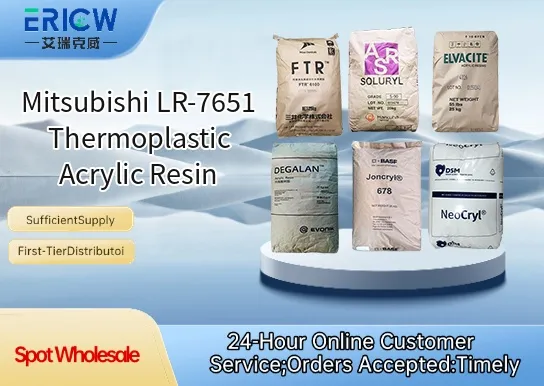
Excellent transparency and gloss retention under UV exposure and thermal cycling.
High melt flow index enabling efficient extrusion and injection molding processing.
Outstanding weatherability and long-term color stability without yellowing.
Good solvent resistance to aliphatic hydrocarbons and mild polar solvents.
Low moisture absorption ensuring dimensional stability in humid environments.
Automotive exterior trim components including grilles, emblems, and light covers.
Architectural glazing and transparent façade elements requiring impact resistance.
Consumer electronics housings for displays, lighting panels, and decorative overlays.
Medical device enclosures where clarity, sterilizability, and biocompatibility support are critical.
Signage and point-of-purchase displays demanding high optical quality and durability.
| Chemical Type | Thermoplastic acrylic copolymer |
| Product Form | Pellets |
| Appearance | Transparent, colorless granules |
| Melt Flow Index (230°C / 3.8 kg) | 8–12 g/10 min |
| Density (23°C) | 1.18–1.20 g/cm³ |
| Water Absorption (24 h, 23°C) | 0.3–0.5 % |
| Heat Deflection Temperature (1.82 MPa) | 95–100 °C |
| Transmittance (3 mm thickness) | ≥92 % |
Q1: What are the primary processing methods suitable for LR-7651?
A: LR-7651 is designed for conventional thermoplastic processing techniques including extrusion, injection molding, and solution coating. Its low melt viscosity and excellent thermal stability support consistent flow and minimal degradation during high-shear operations.
Q2: How does LR-7651 contribute to surface performance in coatings and inks?
A: As a film-forming binder, LR-7651 enhances gloss, scratch resistance, and substrate adhesion—particularly on plastics and metalized films. Its balanced polarity and molecular weight distribution support rapid solvent release and uniform film formation without excessive brittleness.
Q3: Is LR-7651 compatible with common plastic substrates used in packaging applications?
A: Yes—LR-7651 demonstrates good compatibility with polypropylene (PP), polyethylene (PE), and polyester (PET) substrates, making it widely adopted in flexible packaging overprint varnishes and laminating adhesives where clarity and dimensional stability are critical.
Q4: What solvents are typically recommended for dissolving LR-7651 in coating formulations?
A: LR-7651 exhibits good solubility in aromatic hydrocarbons (e.g., toluene, xylene), ketones (e.g., MEK, acetone), and esters (e.g., ethyl acetate). Formulators often use blends to balance evaporation rate, viscosity, and film quality—avoiding highly polar protic solvents like alcohols which may hinder dissolution.
Contact With Us:
E-mail: wangxingqiang@ericwchem.com
Have a Questions? Call Us:
Add:
Building A1, Jiete Industrial Park, Huangpu District, Guangzhou City, Guangdong Province, China