English
 Español
 tiếng việt
 русский
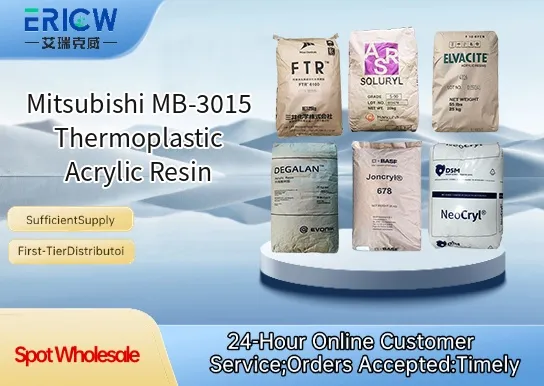
Excellent transparency and gloss retention under UV exposure.
High melt flow index enabling efficient processing via extrusion and injection molding.
Outstanding weatherability and long-term color stability in outdoor applications.
Good solvent resistance to aliphatic hydrocarbons and mild polar solvents.
Low moisture absorption ensuring dimensional stability during fabrication and service life.
Automotive exterior trim and light covers.
Outdoor signage and architectural glazing panels.
Consumer electronics housings requiring optical clarity and surface hardness.
Medical device components where biocompatibility support and sterilization resistance are required.
LED lens and diffuser elements for lighting systems.
| Chemical Type | Thermoplastic acrylic copolymer |
| Product Form | Pellets |
| Appearance | Transparent, colorless granules |
| Melt Flow Index (230°C / 3.8 kg) | 12–16 g/10 min |
| Density (23°C) | 1.18–1.20 g/cm³ |
| Water Absorption (24 h, 23°C) | 0.3–0.4 wt% |
| Heat Deflection Temperature (1.82 MPa) | 102–106°C |
| Transmittance (3 mm thickness) | ≥92% (at 550 nm) |
Q1: What are the primary processing methods suitable for MB-3015?
A: MB-3015 is designed for conventional thermoplastic processing techniques including extrusion, injection molding, and solution coating. Its low melt viscosity and excellent thermal stability support consistent flow and minimal degradation during high-shear operations.
Q2: How does MB-3015 enhance surface properties in coating formulations?
A: As a film-forming binder, MB-3015 contributes to improved gloss, hardness, and mar resistance in protective and decorative coatings. Its linear acrylic architecture provides good clarity and compatibility with common solvents and crosslinkers used in thermoplastic acrylic systems.
Q3: Is MB-3015 compatible with other polymer resins commonly used in industrial coatings?
A: Yes — MB-3015 exhibits broad compatibility with cellulose derivatives, polyvinyl butyral (PVB), and many thermosetting acrylics and melamine formaldehydes. Compatibility testing under intended formulation conditions is recommended to confirm homogeneity and performance stability.
Q4: What solvent systems are typically used to dissolve MB-3015?
A: MB-3015 dissolves readily in common organic solvents such as methyl ethyl ketone (MEK), methyl isobutyl ketone (MIBK), toluene, and xylene. It shows limited solubility in alcohols and water, and its dissolution behavior may vary depending on molecular weight distribution and ambient temperature.
Q5: Can MB-3015 be used in applications requiring FDA-compliant coatings?
A: MB-3015 is not pre-certified for direct food contact use. While it may serve in non-migrating, barrier-layer applications where regulatory compliance is verified by the end-formulator, users must conduct full regulatory evaluation—including migration testing and toxicological review—according to applicable jurisdictional requirements.
Contact With Us:
E-mail: wangxingqiang@ericwchem.com
Have a Questions? Call Us:
Add:
Building A1, Jiete Industrial Park, Huangpu District, Guangzhou City, Guangdong Province, China