English
 Español
 tiếng việt
 русский
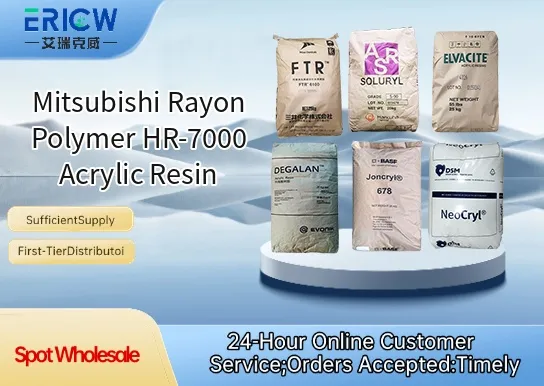
High molecular weight acrylic polymer delivering exceptional film-forming capability and mechanical strength.
Excellent UV resistance and long-term weatherability for outdoor durability applications.
Low yellowing tendency with superior clarity retention after prolonged exposure to light and heat.
Good solubility in common organic solvents including esters, ketones, and aromatic hydrocarbons.
Consistent batch-to-batch reproducibility meeting stringent quality control standards for industrial coatings.
Automotive clearcoats requiring high gloss, scratch resistance, and optical clarity.
Architectural exterior coatings for metal and concrete substrates.
Industrial maintenance coatings exposed to harsh environmental conditions.
Plastic and metal decorative topcoats for consumer electronics and appliances.
High-performance coil coatings for pre-painted steel and aluminum sheets.
| Chemical Type | Acrylic copolymer resin |
| Product Form | Flake or granular solid |
| Appearance | White to off-white homogeneous particles |
| Primary Applications | High-gloss automotive and industrial topcoats |
| Key Features | UV stability, low yellowness index, excellent flow & leveling |
| Recommended Solvents | Butyl acetate, methyl ethyl ketone, xylene |
| Storage Conditions | Store in cool, dry place; avoid direct sunlight and moisture |
| Shelf Life | 24 months from date of manufacture under proper storage |
Q1: What is the primary function of HR-7000 in coating formulations?
A: HR-7000 is a high-molecular-weight acrylic resin designed primarily as a rheology modifier and film-forming aid. It enhances viscosity control, improves sag resistance in vertical applications, and contributes to uniform film formation without compromising clarity or gloss.
Q2: Is HR-7000 compatible with common solvent-based and water-reducible systems?
A: Yes, HR-7000 demonstrates broad compatibility with aromatic and aliphatic hydrocarbon solvents, esters, ketones, and glycol ethers. In water-reducible systems, it performs well when properly dispersed—typically requiring pre-dissolution in a co-solvent prior to aqueous dilution.
Q3: How does HR-7000 compare to conventional acrylic thickeners in terms of shear stability?
A: HR-7000 offers superior shear-thinning behavior and recovery after mechanical stress, making it particularly suitable for high-shear processing (e.g., grinding, high-speed mixing) and spray applications where consistent viscosity retention is critical.
Q4: Can HR-7000 be used in UV-curable coatings?
A: While HR-7000 is not inherently photoreactive, it can be incorporated into hybrid UV-curable systems—especially in pigmented or matte topcoats—provided compatibility with monomers and photoinitiators is confirmed through small-scale testing. Its thermal stability supports post-UV cure baking if required.
Contact With Us:
E-mail: wangxingqiang@ericwchem.com
Have a Questions? Call Us:
Add:
Building A1, Jiete Industrial Park, Huangpu District, Guangzhou City, Guangdong Province, China