English
 Español
 tiếng việt
 русский
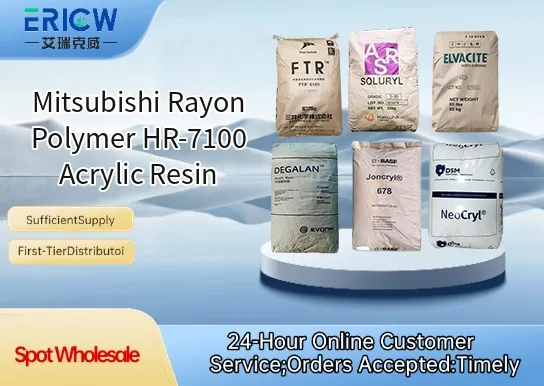
High molecular weight acrylic polymer delivering excellent film-forming capability and mechanical strength.
Outstanding UV resistance and long-term color stability for outdoor durability.
Low yellowing index and superior clarity, ideal for transparent and aesthetic coatings.
Good compatibility with common solvents and crosslinkers used in industrial coating systems.
Consistent batch-to-batch reproducibility ensuring reliable manufacturing performance.
Automotive clearcoats and topcoats requiring high gloss and weatherability.
Architectural exterior coatings for façades and cladding systems.
Industrial maintenance coatings for metal substrates exposed to harsh environments.
Plastic coatings for automotive trim and consumer electronics housings.
High-performance coil coatings for pre-painted metal applications.
| Chemical Type | Acrylic copolymer |
| Product Form | Solution in aromatic hydrocarbon solvent (e.g., xylene) |
| Appearance | Clear, pale yellow liquid |
| Solids Content | 50 ± 1 wt% |
| Viscosity (25°C, Brookfield LVT, Spindle #3, 6 rpm) | 1,800–2,400 cP |
| Acid Value | 8–12 mg KOH/g |
| Glass Transition Temperature (Tg) | ~75°C (DSC, 10°C/min) |
| Primary Applications | High-durability thermosetting coatings |
Q1: What is the primary function of HR-7100 in coating and ink formulations?
A: HR-7100 is a high-molecular-weight acrylic resin designed primarily as a rheology modifier and film-forming aid. It enhances viscosity control, improves pigment suspension stability, and contributes to gloss development and substrate adhesion in solvent-based and high-solids coatings and printing inks.
Q2: Is HR-7100 compatible with common organic solvents and other polymer resins?
A: Yes, HR-7100 exhibits good compatibility with typical coating solvents such as aromatic hydrocarbons, ketones, and esters. It also blends well with many conventional resins including alkyds, polyesters, and other acrylics—though compatibility testing under actual formulation conditions is recommended to ensure optimal performance and stability.
Q3: How does HR-7100 influence drying behavior and final film properties?
A: HR-7100 supports balanced solvent release and promotes uniform film formation, leading to improved leveling and reduced surface defects. Its molecular architecture contributes to enhanced hardness, flexibility, and chemical resistance in the cured film without significantly extending dry-to-touch or through-dry times.
Q4: What are the recommended handling and storage conditions for HR-7100?
A: HR-7100 should be stored in its original sealed container at ambient temperatures, away from direct sunlight and sources of heat or ignition. Prolonged exposure to freezing temperatures or excessive moisture is not recommended, as it may affect dispersion stability upon subsequent use.
Contact With Us:
E-mail: wangxingqiang@ericwchem.com
Have a Questions? Call Us:
Add:
Building A1, Jiete Industrial Park, Huangpu District, Guangzhou City, Guangdong Province, China