English
 Español
 tiếng việt
 русский
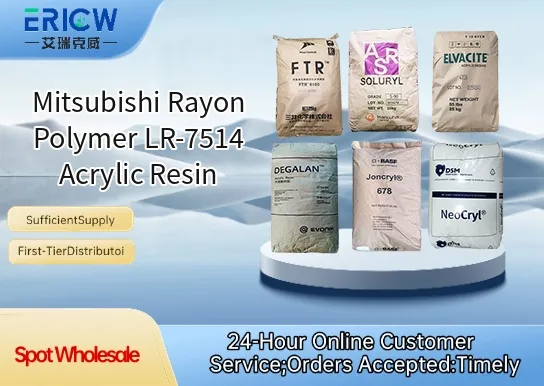
High transparency and excellent optical clarity for premium visual performance.
Superior weather resistance with outstanding UV stability and long-term color retention.
Good solvent compatibility, enabling formulation flexibility in coating and adhesive systems.
Low viscosity in solution form, facilitating easy processing and uniform film formation.
Excellent adhesion to various substrates including plastics, metals, and primed surfaces.
Automotive clearcoats and OEM topcoats requiring high gloss and durability.
Architectural and industrial maintenance coatings for exterior metal and concrete.
UV-curable and solvent-based decorative coatings for consumer electronics housings.
High-performance protective coatings for signage and outdoor display panels.
Base resin component in specialty graphic arts inks and overprint varnishes.
| Chemical Type | Acrylic copolymer |
| Product Form | Solution (in aromatic hydrocarbon solvent) |
| Appearance | Clear, colorless to pale yellow liquid |
| Solids Content | Approx. 50 wt% (as supplied) |
| Viscosity (25°C) | Approx. 800–1,200 mPa·s (Brookfield RVT, spindle #3, 20 rpm) |
| Acid Value | 5–15 mg KOH/g |
| Glass Transition Temperature (Tg) | Approx. 75°C (by DSC) |
| Primary Applications | High-gloss, weather-resistant topcoats and protective coatings |
Q1: What is the primary function of LR-7514 in coating formulations?
A: LR-7514 is a specialty acrylic resin designed primarily as a rheology modifier and film-forming aid in water-based industrial coatings. It enhances viscosity stability, improves pigment suspension, and contributes to uniform film formation without significantly compromising drying speed or gloss development.
Q2: Is LR-7514 compatible with other common acrylic or styrene-acrylic emulsions?
A: Yes, LR-7514 exhibits broad compatibility with most commercially available anionic and nonionic acrylic, styrene-acrylic, and vinyl acetate-based emulsions. Compatibility should be verified empirically in the final formulation due to sensitivity to pH, electrolyte content, and surfactant systems.
Q3: How is LR-7514 typically incorporated into a coating batch?
A: LR-7514 is generally added during the let-down stage, after dispersion of pigments and fillers, and under moderate agitation. It can be introduced neat or pre-diluted with water or co-solvent—avoid high-shear mixing post-addition to preserve its associative thickening structure.
Q4: Does LR-7514 offer any benefits for freeze-thaw stability in waterborne systems?
A: Yes, when properly formulated, LR-7514 contributes to improved freeze-thaw resistance by reinforcing the colloidal network and reducing phase separation tendencies. Its performance in this regard is enhanced when used alongside appropriate glycol-based co-solvents and stabilizing surfactants.
Contact With Us:
E-mail: wangxingqiang@ericwchem.com
Have a Questions? Call Us:
Add:
Building A1, Jiete Industrial Park, Huangpu District, Guangzhou City, Guangdong Province, China