English
 Español
 tiếng việt
 русский
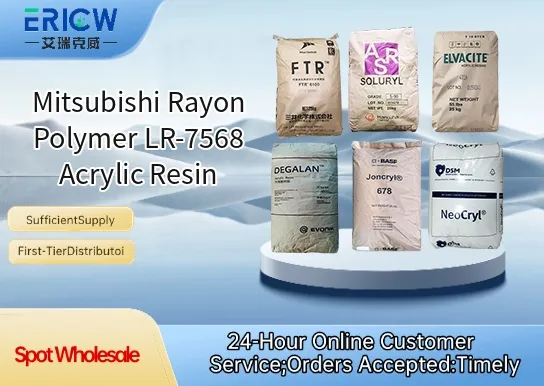
High transparency and excellent UV resistance for long-term outdoor durability.
Low viscosity solution enabling easy handling, spray application, and uniform film formation.
Excellent compatibility with common solvent-based coating systems and crosslinkers.
Good thermal stability with minimal yellowing during curing and service life.
Consistent batch-to-batch reproducibility meeting stringent quality control standards.
Automotive clearcoats and topcoats for OEM and refinish applications.
Industrial maintenance coatings for metal substrates in architectural and infrastructure projects.
High-gloss decorative finishes for appliances and consumer electronics housings.
UV-curable hybrid formulations where acrylic backbone enhances flexibility and adhesion.
| Chemical Type | Acrylic copolymer resin |
| Product Form | Solution in aromatic hydrocarbon solvent (e.g., xylene or Solvesso™) |
| Appearance | Clear, colorless to pale yellow liquid |
| Non-Volatile Content (NV%) | 45–50% (by weight, 120°C, 60 min) |
| Viscosity (25°C) | 1,200–1,800 mPa·s (Brookfield DV-II+ viscometer, spindle #3, 20 rpm) |
| Gardner Color | ≤ 2 |
| Acid Value | ≤ 5 mg KOH/g |
| Primary Applications | High-performance thermosetting topcoats and clearcoats |
Q1: What is the primary function of LR-7568 in coating formulations?
A: LR-7568 is a specialty acrylic resin designed primarily as a rheology modifier and film-forming aid in water-based industrial and architectural coatings. It enhances viscosity stability, improves sag resistance, and contributes to uniform film formation without compromising gloss or clarity.
Q2: Is LR-7568 compatible with common water-based polymer systems?
A: Yes — LR-7568 exhibits broad compatibility with acrylic emulsions, vinyl acetate copolymers, styrene-acrylic dispersions, and many crosslinkable latex systems. Compatibility should be verified under actual formulation conditions, especially when high electrolyte content or low pH is present.
Q3: How should LR-7568 be incorporated into a formulation?
A: It is typically added during the let-down stage, after pigment grinding, under moderate agitation. Pre-dilution with water or co-solvent may facilitate dispersion. Avoid high-shear mixing post-addition to prevent mechanical degradation of the polymer structure.
Q4: Does LR-7568 contribute to final film performance properties?
A: Yes — it supports improved scrub resistance, enhanced block resistance in dry films, and better substrate adhesion, particularly on low-energy surfaces. Its molecular architecture also helps reduce surface tension effects that can lead to cratering or orange peel.
Contact With Us:
E-mail: wangxingqiang@ericwchem.com
Have a Questions? Call Us:
Add:
Building A1, Jiete Industrial Park, Huangpu District, Guangzhou City, Guangdong Province, China