English
 Español
 tiếng việt
 русский
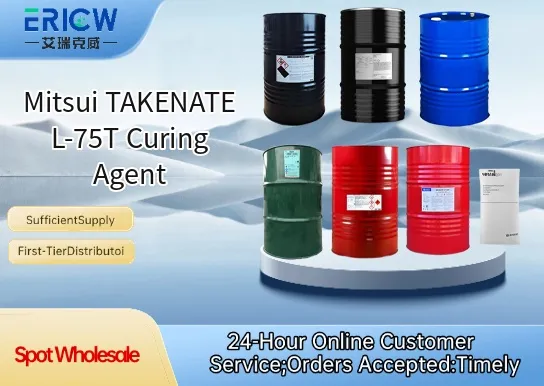
High-reactivity aromatic amine-based curing agent designed for rapid room-temperature or low-temperature epoxy curing.
Excellent compatibility with standard bisphenol-A and bisphenol-F epoxy resins, enabling homogeneous mixing without phase separation.
Delivers superior mechanical strength, chemical resistance, and thermal stability in cured epoxy systems.
Low viscosity (approx. 1,200–1,800 mPa·s at 25°C) facilitates easy handling, metering, and impregnation in industrial processing.
Reduced volatility and improved handling safety compared to conventional aliphatic amines, supporting safer workplace operations.
Structural adhesives for automotive and aerospace bonding assemblies.
Electrical encapsulants and potting compounds for power electronics and transformers.
High-performance coatings for corrosion protection of steel infrastructure and marine equipment.
Composite matrix resins in fiber-reinforced polymer (FRP) pultrusion and filament winding processes.
Repair mortars and anchoring systems requiring fast strength development under ambient conditions.
| Chemical Type | Aromatic amine adduct |
| Product Form | Liquid |
| Appearance | Pale yellow to amber transparent liquid |
| Primary Applications | Epoxy resin curing agent for adhesives, coatings, composites, and encapsulants |
| Key Features | Room-temperature curable, low viscosity, high reactivity, good chemical resistance |
| Benefits | Shorter cycle times, improved productivity, enhanced durability, reduced energy consumption |
| Storage Stability | ≥12 months at 5–30°C in unopened original packaging |
| Recommended Mix Ratio (by weight) | 100 parts epoxy resin : 25–35 parts L-75T (varies by resin type; confirm via DSC testing) |
Q1: What is the primary function of TAKENATE L-75T in polyurethane systems?
A: TAKENATE L-75T is a latent, low-volatility aromatic amine-based curing agent designed to provide controlled reactivity and extended pot life in two-component polyurethane coatings, adhesives, and elastomers—especially where ambient-cure performance and film hardness development are critical.
Q2: How does L-75T differ from conventional aromatic amine curatives like MOCA or DETDA?
A: Unlike highly reactive liquid amines, L-75T offers improved handling safety due to its solid, crystalline form and significantly reduced vapor pressure. Its latency enables longer working times without compromising final crosslink density or thermal stability, making it suitable for applications requiring precise processing control.
Q3: Is TAKENATE L-75T compatible with common polyol types used in industrial PU formulations?
A: Yes, L-75T demonstrates broad compatibility with polyester, polyether, and polycarbonate diols and triols. It is particularly effective in high-performance coating and casting systems where balanced cure profile and mechanical property development are required.
Q4: What are typical storage and handling recommendations for this curing agent?
A: Store in original sealed containers under cool, dry conditions away from moisture, strong oxidizers, and direct sunlight. Due to its amine nature, minimize exposure to humid air during handling to prevent surface tackiness or premature reactivity. Use appropriate personal protective equipment including gloves and eye protection.
Q5: Can L-75T be used in systems requiring FDA-compliant or food-contact-safe cured films?
A: TAKENATE L-75T is not pre-approved for food-contact applications. Formulators must conduct full regulatory evaluation—including migration testing and compliance verification—based on the final cured product’s intended use, as suitability depends on formulation composition, cure conditions, and applicable regional regulations.
Contact With Us:
E-mail: wangxingqiang@ericwchem.com
Have a Questions? Call Us:
Add:
Building A1, Jiete Industrial Park, Huangpu District, Guangzhou City, Guangdong Province, China