English
 Español
 tiếng việt
 русский
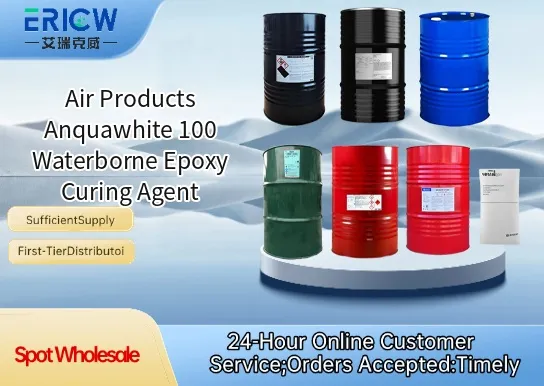
Low-VOC, waterborne formulation compliant with global environmental regulations including EPA and EU REACH.
Excellent compatibility with standard bisphenol-A and bisphenol-F epoxy resins in aqueous dispersions.
Enables fast ambient-cure performance with good early hardness development and low film-forming temperature.
Provides superior adhesion to concrete, steel, and galvanized substrates without primer requirement.
Non-yellowing amine chemistry ensures long-term color stability in topcoat and maintenance applications.
Waterborne epoxy floor coatings for commercial and industrial facilities.
Concrete repair and protective mortars requiring low-emission, high-durability cure systems.
Anti-corrosive primers and intermediate coats for structural steel in architectural and infrastructure projects.
Hygienic coatings for food processing, pharmaceutical, and cleanroom environments.
Repair and maintenance coatings for bridges, parking structures, and wastewater treatment plants.
| Chemical Type | Aliphatic polyamine-based, water-dispersible curing agent |
| Product Form | Opaque white liquid dispersion |
| Appearance | Off-white to light tan, homogeneous liquid |
| pH (1% aqueous solution) | 9.5–10.5 |
| Solids Content (wt%) | 48–52% |
| Viscosity (Brookfield, 25°C, spindle #3, 20 rpm) | 1,200–2,500 cP |
| Density (25°C) | 1.04–1.07 g/cm³ |
| Free Amine Value (mg KOH/g) | 320–360 |
Q1: What types of epoxy resins is Anquawhite 100 compatible with?
A: Anquawhite 100 is specifically designed for use with waterborne epoxy dispersions and certain hydrophobic epoxy resins modified for aqueous compatibility. It performs best with bisphenol A- and bisphenol F-based epoxy dispersions, and compatibility should be confirmed via lab-scale formulation testing.
Q2: How does Anquawhite 100 contribute to VOC reduction in epoxy coatings?
A: As a waterborne curing agent, Anquawhite 100 enables high-solids, low-VOC epoxy systems by eliminating the need for organic solvents typically required with conventional amine hardeners. Its aqueous formulation supports compliance with evolving regional VOC regulations without compromising film formation or crosslink density.
Q3: What are the typical pot life and cure profile considerations when using Anquawhite 100?
A: Pot life varies depending on formulation pH, co-solvent content, and ambient temperature—but generally ranges from several hours to over a day under standard conditions. Cure proceeds at ambient temperatures with accelerated development upon mild thermal treatment (e.g., 40–60 °C), delivering good early hardness and chemical resistance within 24–72 hours.
Q4: Can Anquawhite 100 be used in food-contact or industrial maintenance applications?
A: Anquawhite 100 is formulated for industrial protective coatings, including concrete floorings, tank linings, and metal primers. While it is not pre-approved for direct food-contact applications, its low-odor, low-VOC profile makes it suitable for environments where hygiene and worker safety are priorities—always verify final formulation compliance with applicable regulatory requirements.
Contact With Us:
E-mail: wangxingqiang@ericwchem.com
Have a Questions? Call Us:
Add:
Building A1, Jiete Industrial Park, Huangpu District, Guangzhou City, Guangdong Province, China