English
 Español
 tiếng việt
 русский
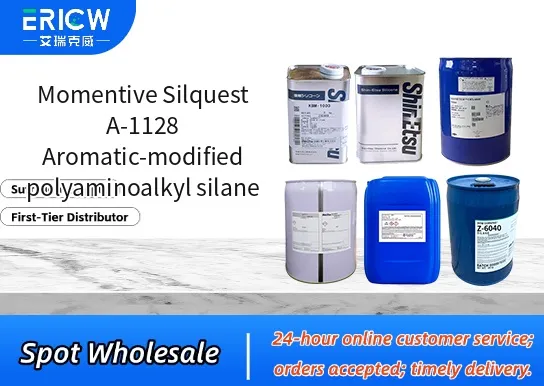
Enhanced hydrolytic stability due to aromatic modification, improving shelf life and handling robustness.
High amine functionality provides superior adhesion promotion between organic polymers and inorganic substrates (e.g., glass, metals, minerals).
Reduced volatility and improved odor profile compared to aliphatic amino-silanes, supporting safer industrial handling.
Excellent compatibility with epoxy, phenolic, and polyurethane resin systems for use in high-performance composites and coatings.
Enables covalent bonding at interface, enhancing moisture resistance and long-term durability of bonded assemblies.
Adhesion promoters in structural adhesives and sealants for automotive and aerospace assembly.
Surface treatment agents for mineral-filled thermosets (e.g., fiberglass-reinforced plastics and cast polymer composites).
Performance additive in epoxy-based electrical encapsulants and potting compounds.
Interfacial modifier in silica-reinforced rubber compounds for improved filler dispersion and tear strength.
| Chemical Type | Aromatic-modified polyaminoalkyl silane |
| Product Form | Liquid |
| Appearance | Pale yellow to amber clear liquid |
| Primary Applications | Adhesion promotion, surface modification, coupling agent in composites and coatings |
| Key Features | Hydrolytically stable, low volatility, high amine functionality, aromatic backbone |
| Benefits | Improved bond durability, enhanced moisture resistance, safer handling vs. aliphatic analogues |
| Reactivity | Reacts with silanol groups on inorganic surfaces and epoxy/isocyanate functional groups in resins |
Contact With Us:
E-mail: wangxingqiang@ericwchem.com
Have a Questions? Call Us:
Add:
Building A1, Jiete Industrial Park, Huangpu District, Guangzhou City, Guangdong Province, China