English
 Español
 tiếng việt
 русский
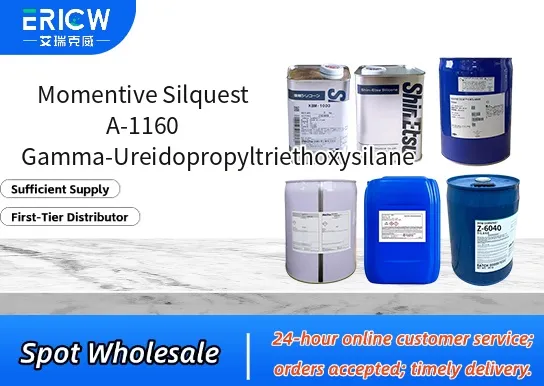
Gamma-ureidopropyl functional group enables strong hydrogen-bonding interactions with polar polymers and fillers.
Triethoxysilane hydrolysis yields reactive silanol groups for robust covalent bonding to inorganic surfaces (e.g., glass, silica, metals).
Enhances interfacial adhesion and dispersion stability in filled polymer systems without requiring acidic or basic catalysts.
Offers superior hydrolytic stability compared to aminosilanes with primary amine functionality, reducing premature condensation.
Compatible with ambient-cure and heat-cure formulations across thermoset and thermoplastic matrices.
Adhesion promotion in automotive sealants and structural adhesives for glass-to-metal bonding.
Surface modification of silica and clay fillers in high-performance rubber compounds (e.g., tires, industrial hoses).
Functional additive in UV-curable coatings and inks to improve substrate wetting and crosslink density.
Interfacial coupling agent in fiber-reinforced composites using E-glass or basalt fibers.
Performance enhancer in moisture-cure polyurethane and silicone hybrid sealants.
| Chemical Type | Gamma-ureidopropyltriethoxysilane |
| Product Form | Liquid |
| Appearance | Clear, colorless to pale yellow liquid |
| Primary Applications | Adhesion promoter, filler coupling agent, surface modifier |
| Key Features | Hydrogen-bonding ureido group, hydrolyzable ethoxy groups, low volatility |
| Benefits | Improved composite mechanical properties, reduced filler agglomeration, enhanced humidity resistance |
| pH (1% in water) | 5.0–7.0 |
| Specific Gravity (25°C) | 0.98–1.02 |
Contact With Us:
E-mail: wangxingqiang@ericwchem.com
Have a Questions? Call Us:
Add:
Building A1, Jiete Industrial Park, Huangpu District, Guangzhou City, Guangdong Province, China