English
 Español
 tiếng việt
 русский
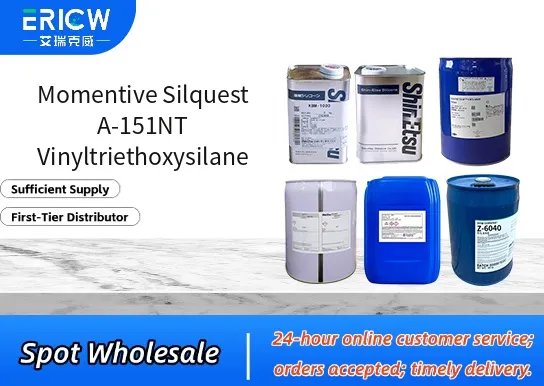
Enhances adhesion between organic polymers and inorganic substrates such as glass, metals, and minerals.
Acts as a coupling agent to improve mechanical strength and moisture resistance in filled composites.
Provides excellent hydrolytic stability due to its triethoxy functionality and optimized NT-grade purity.
Enables covalent bonding with vinyl polymer matrices (e.g., PVC, styrene-butadiene, acrylics) via free-radical reactions.
Offers low volatility and improved handling safety compared to lower-alkoxy or chlorosilane alternatives.
Reinforced thermoplastics and thermosets, including glass-fiber–reinforced polypropylene (PP) and nylon.
Adhesives and sealants requiring durable interfacial bonding to silica, alumina, or treated metal surfaces.
Rubber compounds—especially silicone, EPDM, and natural rubber—for improved filler dispersion and tear strength.
Coatings and inks formulated for high-durability substrates like automotive primers and industrial metal finishes.
| Chemical Type | Vinyl-functional trialkoxysilane |
| Product Form | Liquid |
| Appearance | Colorless to pale yellow clear liquid |
| Primary Applications | Coupling agent for glass fiber, mineral fillers, and surface treatment of inorganic substrates |
| Key Features | Coupling, adhesion promotion, moisture resistance enhancement |
| Benefits | Improved composite mechanical properties, reduced water absorption, enhanced long-term durability |
| Molecular Weight | 208.3 g/mol |
| Boiling Point (760 mmHg) | 210–215 °C |
Contact With Us:
E-mail: wangxingqiang@ericwchem.com
Have a Questions? Call Us:
Add:
Building A1, Jiete Industrial Park, Huangpu District, Guangzhou City, Guangdong Province, China