English
 Español
 tiếng việt
 русский
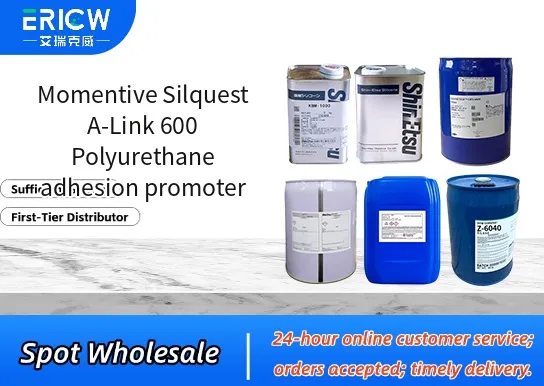
Enhances interfacial adhesion between polyurethane sealants/adhesives and low-surface-energy substrates such as aluminum, stainless steel, and anodized metals.
Contains dual-reactive silane functionality—alkoxy silane groups for covalent bonding to inorganic surfaces and urethane-reactive groups for integration into PU polymer networks.
Improves long-term durability of bonded assemblies under humid, thermal, and cyclic stress conditions.
Compatible with one-component (1K) and two-component (2K) moisture-curing and catalyzed polyurethane systems.
Enables reduced surface pretreatment requirements—supports direct application on lightly cleaned or solvent-wiped metal substrates.
Automotive glazing and structural bonding of windshields and panoramic roofs.
Architectural curtain wall and façade sealing where PU sealants interface with metal framing and cladding.
Industrial assembly of metal-to-elastomer or metal-to-plastic components using polyurethane adhesives.
Rail transportation bonding applications requiring high-humidity resistance and vibration durability.
| Chemical Type | Bifunctional silane with alkoxy and urethane-reactive groups |
| Product Form | Clear, colorless to pale yellow liquid |
| Appearance | Homogeneous, low-viscosity liquid |
| Primary Applications | Polyurethane sealants, adhesives, and coatings for metal substrates |
| Key Features | Covalent substrate bonding + polymer network integration |
| Benefits | Improved peel strength, humidity resistance, and aging performance |
| Storage Conditions | Store in tightly sealed containers at 5–30 °C; protect from moisture and direct sunlight |
Contact With Us:
E-mail: wangxingqiang@ericwchem.com
Have a Questions? Call Us:
Add:
Building A1, Jiete Industrial Park, Huangpu District, Guangzhou City, Guangdong Province, China