English
 Español
 tiếng việt
 русский
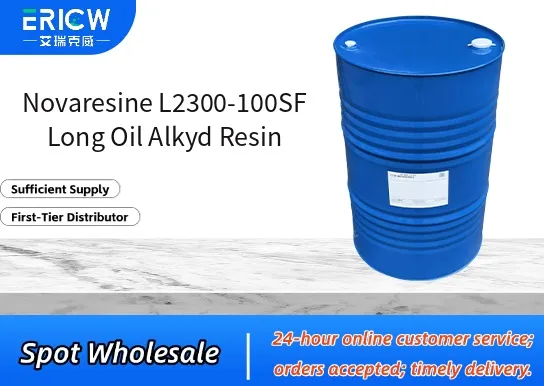
High solids content for reduced VOC emissions and improved film build.
Excellent flow and leveling properties for smooth, defect-free finishes.
Superior outdoor durability with enhanced resistance to UV degradation and weathering.
Good compatibility with common alkyd thinners, metallic driers, and pigment systems.
Optimized long-oil formulation delivering flexibility and adhesion on diverse substrates.
General-purpose exterior architectural coatings.
Industrial maintenance paints for metal structures and equipment.
Marine-grade topside and deck coatings.
Wood finishing systems requiring high gloss and weather resistance.
Corrosion-inhibitive primers and mid-coats in protective coating systems.
| Chemical Type | Long-oil modified alkyd resin (soya oil-based) |
| Product Form | Clear to pale amber viscous liquid |
| Appearance | Homogeneous, transparent to slightly hazy solution |
| Primary Applications | Exterior decorative and protective coatings |
| Key Features | High-solids, low-VOC, excellent drying performance |
| Benefits | Enhanced gloss retention, flexibility, and substrate adhesion |
| Solvent Compatibility | Compatible with aromatic hydrocarbons (e.g., xylene, solvent naphtha) |
| Storage Stability | Stable at 20–25°C for ≥12 months in sealed containers |
Q1: What is the primary application area for Novaresine L2300-100SF?
A: Novaresine L2300-100SF is specifically formulated for high-performance decorative and protective coatings, particularly in solvent-borne architectural and industrial maintenance paints where excellent gloss retention, flexibility, and outdoor durability are required.
Q2: How does the “Long Oil” designation affect formulation behavior?
A: As a long oil alkyd resin, L2300-100SF offers enhanced flexibility, improved flow and leveling, and greater resistance to cracking compared to medium- or short-oil variants—making it well-suited for coatings applied on substrates subject to thermal expansion or mechanical stress.
Q3: Is Novaresine L2300-100SF compatible with common crosslinkers and additives?
A: Yes, it demonstrates good compatibility with conventional driers (e.g., cobalt-, zirconium-, and calcium-based), standard solvents (aromatics, esters, ketones), and many acrylic or melamine co-resins—enabling hybrid systems with balanced drying performance and film integrity.
Q4: What viscosity range should be expected, and how does it influence processing?
A: L2300-100SF is supplied at a medium-to-high viscosity typical of long oil alkyds, allowing straightforward incorporation into paint mills or let-down processes without excessive thinning—though final viscosity adjustment is recommended based on target application method (e.g., brushing, rolling, or spraying).
Contact With Us:
E-mail: wangxingqiang@ericwchem.com
Have a Questions? Call Us:
Add:
Building A1, Jiete Industrial Park, Huangpu District, Guangzhou City, Guangdong Province, China