English
 Español
 tiếng việt
 русский
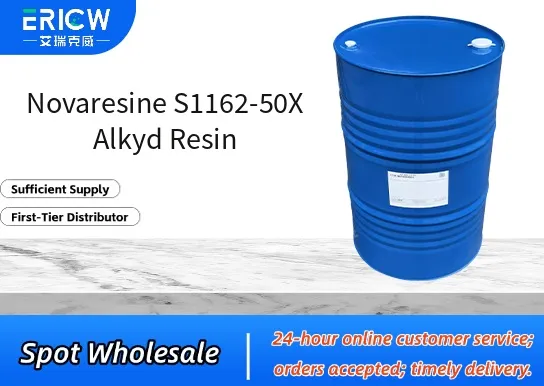
Medium-oil-length alkyd resin offering balanced drying speed and film flexibility.
Excellent compatibility with common solvents, phthalate plasticizers, and other coating resins.
Provides good gloss retention and long-term weather resistance in exterior applications.
Low-viscosity liquid form enabling easy incorporation into solvent-based paint and varnish formulations.
Designed for high-solids systems to support VOC-compliant coating solutions.
General-purpose air-drying decorative enamels for metal and wood substrates.
Industrial maintenance coatings requiring durable, abrasion-resistant finishes.
Marine topcoats where moderate chemical resistance and UV stability are required.
Automotive refinish primers and mid-coats in low-bake or ambient-cure systems.
Architectural trim and façade paints for residential and commercial buildings.
| Chemical Type | Medium-oil modified alkyd resin |
| Product Form | Liquid |
| Appearance | Pale yellow to amber clear liquid |
| Solvent Base | Xylene/toluene blend (standard) |
| Non-Volatile Content | ~50 ± 2 wt% |
| Viscosity (25°C, Brookfield LVT, Spindle #3, 60 rpm) | 1,200–1,800 cP |
| Acid Value | 6–10 mg KOH/g |
| Key Features | Drying performance, compatibility, gloss development, outdoor durability |
Q1: What is the primary application field for Novaresine S1162-50X?
A: Novaresine S1162-50X is a medium-oil alkyd resin designed primarily for solvent-based decorative and protective coatings, including interior/exterior architectural paints, wood finishes, and general industrial maintenance coatings where balanced drying performance, gloss retention, and substrate adhesion are required.
Q2: Is Novaresine S1162-50X compatible with other resin types such as acrylics or polyurethanes?
A: Yes, it is generally compatible with many common co-resins including styrenated alkyds, acrylic dispersions, and certain polyurethane modifiers—though compatibility should always be verified in the final formulation through stability testing and film property evaluation under intended processing and curing conditions.
Q3: How does Novaresine S1162-50X perform in terms of drying behavior and film formation?
A: It offers conventional air-drying characteristics typical of medium-oil alkyds, providing good through-dry and surface hardness development. Film formation is enhanced by oxidative crosslinking, and drying time can be adjusted using standard cobalt- or manganese-based driers in accordance with formulation goals and regulatory guidelines.
Q4: Can Novaresine S1162-50X be used in low-VOC formulations?
A: While inherently formulated for solvent-borne systems, it can contribute to VOC-reduced coatings when combined with high-solids solvents or reactive diluents—and its medium-oil length supports reasonable viscosity control without excessive solvent demand. Final VOC compliance depends on the full formulation matrix and must be validated per regional regulatory definitions.
Contact With Us:
E-mail: wangxingqiang@ericwchem.com
Have a Questions? Call Us:
Add:
Building A1, Jiete Industrial Park, Huangpu District, Guangzhou City, Guangdong Province, China