English
 Español
 tiếng việt
 русский
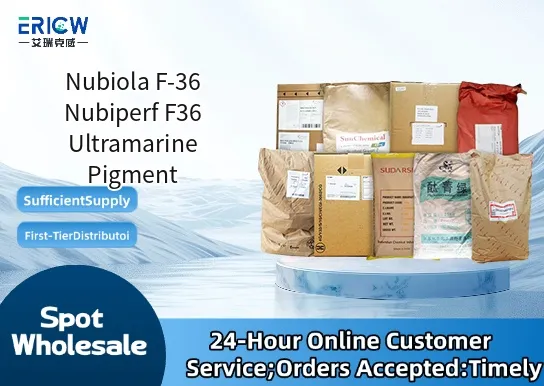
High chroma and exceptional blue intensity with clean violet undertone.
Excellent thermal stability up to 200 °C, suitable for medium-temperature processing.
Outstanding lightfastness and weather resistance in non-acidic media.
Low water-soluble sulfate content ensures improved dispersion stability in aqueous systems.
Free-flowing, dust-reduced powder form optimized for automated dosing and mixing.
Architectural coatings and decorative plasters.
Plastic coloration for rigid PVC, PS, and ABS applications.
High-performance inks for packaging and security printing.
Artist-grade acrylics and water-based fine art paints.
Colored concrete and cementitious tile products.
| Chemical Type | Sodium aluminosilicate sulfur complex (Ultramarine Blue) |
| Product Form | Fine, free-flowing powder |
| Appearance | Deep violet-blue granular powder |
| Primary Applications | Coatings, plastics, inks, construction materials, artists’ colors |
| Key Features | High tinting strength, low acidity, non-toxic, heavy-metal-free |
| Benefits | Consistent batch-to-batch color, excellent dispersibility, pH-stable above 5.5 |
| pH (10% aqueous suspension) | 7.5–8.5 |
| Particle Size (D50) | 12–16 µm |
Q1: What are the key performance advantages of Nubiola F-36 compared to standard ultramarine pigments?
A: Nubiola F-36 offers enhanced thermal stability and improved resistance to acid environments, making it particularly suitable for applications requiring processing at elevated temperatures or exposure to mildly acidic media. Its optimized particle size distribution also contributes to superior tinting strength and dispersion consistency in demanding polymer and coating systems.
Q2: Is Nubiola F-36 compatible with polyolefins such as PP and PE?
A: Yes, Nubiola F-36 is specifically formulated for compatibility with polyolefin matrices. It demonstrates good dispersion behavior during melt processing and maintains color integrity under typical extrusion and injection molding conditions.
Q3: How should Nubiola F-36 be dispersed for optimal performance in liquid coatings?
A: For liquid systems, pre-dispersion using high-shear mixing or bead milling is recommended. The pigment responds well to common organic dispersants and wetting agents; optimal dispersion efficiency depends on resin chemistry, solvent polarity, and target viscosity — formulation trials are advised to fine-tune rheology and gloss retention.
Q4: Does Nubiola F-36 contain heavy metals or halogens?
A: No, Nubiola F-36 is an inorganic sodium aluminosulfosilicate pigment and does not contain regulated heavy metals (e.g., lead, cadmium, mercury) or halogenated compounds. Its composition aligns with general industrial safety and environmental stewardship expectations for colorants used in non-food-contact applications.
Contact With Us:
E-mail: wangxingqiang@ericwchem.com
Have a Questions? Call Us:
Add:
Building A1, Jiete Industrial Park, Huangpu District, Guangzhou City, Guangdong Province, China