English
 Español
 tiếng việt
 русский
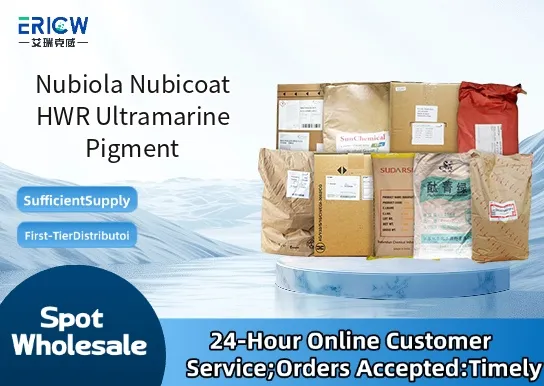
Exceptional heat stability up to 250 °C, enabling use in high-temperature coating and plastic processing.
Outstanding lightfastness and weather resistance, maintaining vivid blue hue under prolonged UV exposure.
High chroma and clean, reddish-blue shade with excellent tinting strength and dispersion efficiency.
Low sulfate content and optimized surface treatment for enhanced compatibility in water-based and solvent-based systems.
Non-toxic, heavy-metal-free formulation compliant with major global regulatory frameworks (e.g., EN 71-3, RoHS).
Automotive OEM and refinish coatings requiring thermal stability and color consistency.
Industrial maintenance coatings for metal and concrete substrates exposed to outdoor conditions.
High-performance architectural coatings, including elastomeric and silicone-modified acrylics.
Engineering thermoplastics such as polyamide (PA6, PA66) and polybutylene terephthalate (PBT).
Powder coatings for appliances, furniture, and construction components.
| Chemical Type | Sodium aluminosilicate with polysulfide chromophore |
| Product Form | Fine free-flowing powder |
| Appearance | Uniform deep reddish-blue powder |
| Primary Applications | Coatings, engineering plastics, powder coatings |
| Key Features | Heat stable, lightfast, low sulfate, dispersible |
| Particle Size (D50) | 8–12 µm |
| pH (5% aqueous suspension) | 6.5–8.0 |
| Volatile Matter (105 °C, 2 h) | ≤1.0 wt% |
Q1: What makes Nubicoat HWR Ultramarine Pigment suitable for high-weather-resistance applications?
A: Nubicoat HWR is specially engineered with enhanced inorganic surface treatment and optimized particle morphology to improve resistance to UV exposure, humidity, and thermal stress—making it well-suited for exterior coatings, architectural finishes, and long-life industrial applications where color stability under environmental stress is critical.
Q2: Is Nubicoat HWR compatible with water-based coating systems?
A: Yes—Nubicoat HWR is formulated for excellent dispersibility and stability in aqueous media, including acrylic, styrene-acrylic, and PUD-based systems. Its hydrophobic surface treatment helps minimize pigment agglomeration and supports consistent color development without compromising rheology or film integrity.
Q3: How does Nubicoat HWR differ from standard ultramarine pigments in terms of acid resistance?
A: Unlike conventional ultramarines, Nubicoat HWR features a robust, tailored inorganic barrier layer that significantly improves tolerance to mildly acidic environments—such as those encountered during storage, formulation, or in certain architectural primers—without rapid color degradation or sulfur release.
Q4: Can Nubicoat HWR be used in powder coatings?
A: Yes—it is widely used in thermosetting powder coatings, particularly epoxy-polyester hybrids, where its thermal stability up to typical cure temperatures (180–200 °C) and low volatility support strong chroma retention and minimal blooming risk.
Contact With Us:
E-mail: wangxingqiang@ericwchem.com
Have a Questions? Call Us:
Add:
Building A1, Jiete Industrial Park, Huangpu District, Guangzhou City, Guangdong Province, China