English
 Español
 tiếng việt
 русский
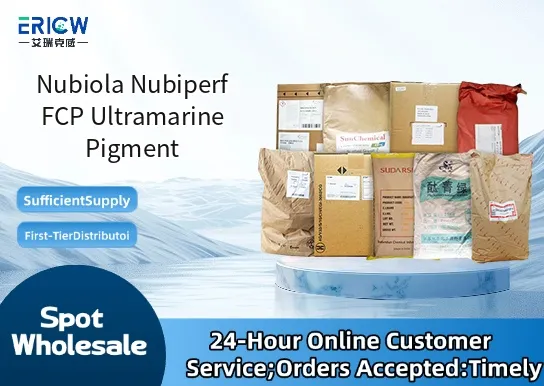
Exceptional lightfastness and weather resistance for long-term color stability in demanding outdoor applications.
High tinting strength and clean, bright blue hue with excellent chroma and transparency control.
Optimized particle size distribution for superior dispersion in aqueous and solvent-based systems.
Low sulfate content and high chemical purity, ensuring compatibility with sensitive resin systems and minimal risk of blooming.
Free-flowing, dust-reduced powder form designed for safe handling and efficient industrial dosing.
Architectural coatings including exterior masonry paints and stucco finishes.
Plastics processing—especially polyolefins, PVC, and engineering thermoplastics requiring heat-stable blue shades.
Printing inks for packaging and security applications where color consistency and UV resistance are critical.
Artists’ colors and high-performance graphic arts media requiring non-toxic, lightfast pigments.
Construction materials such as colored concrete, terrazzo, and decorative mortars.
| Chemical Type | Sodium aluminosilicate sulfur complex (Ultramarine Blue) |
| Product Form | Free-flowing fine powder |
| Appearance | Fine, homogeneous blue powder with violet undertone |
| Primary Applications | Coatings, plastics, inks, construction materials, artists’ colors |
| Key Features | Lightfastness ≥ 7 (ISO 105-B02), Weather resistance ≥ 4 (DIN 53388), Non-bleeding |
| Benefits | Non-toxic, heavy-metal-free, REACH-compliant, low sulfate content (< 0.5%) |
| pH (10% aqueous suspension) | 6.5 – 7.5 |
| Heat Stability | Stable up to 180°C (short-term exposure) |
Q1: What distinguishes Nubiperf FCP from standard ultramarine pigments?
A: Nubiperf FCP is a high-performance, fine-particle ultramarine pigment engineered for enhanced dispersion stability and superior color strength in demanding applications. Its optimized particle size distribution and surface treatment provide improved resistance to flocculation and better compatibility with polar polymer systems compared to conventional grades.
Q2: Is Nubiperf FCP suitable for use in food-contact plastics?
A: Nubiperf FCP is designed for industrial and decorative applications where regulatory compliance is not required. It is not certified for direct food-contact use under major global food safety frameworks. Customers requiring food-contact approval should consult Nubiola’s dedicated food-grade pigment portfolio and verify suitability with their regulatory team.
Q3: How should Nubiperf FCP be dispersed in thermoplastic compounds?
A: For optimal performance in thermoplastics, pre-dispersion via high-shear mixing or twin-screw compounding is recommended. The pigment typically performs well in polyolefins, engineering thermoplastics, and polar resins when processed at appropriate temperatures and residence times. Avoid excessive thermal exposure to preserve its characteristic blue-violet hue and brightness.
Q4: Does Nubiperf FCP exhibit good lightfastness and weather resistance?
A: Yes — as an inorganic ultramarine pigment, Nubiperf FCP offers inherently high lightfastness and excellent resistance to UV degradation under indoor conditions. However, it is sensitive to acidic environments and prolonged outdoor exposure without protective overcoating or resin stabilization, which may lead to fading or color shift.
Q5: What is the typical dosage range for achieving full opacity and chroma in masterbatches?
A: Dosage depends on formulation requirements, base resin, and desired shade intensity. In most thermoplastic masterbatches, effective loading generally ranges from 0.1% to 2% by weight — with lower concentrations often sufficient due to its high tinting strength and clean spectral profile.
Contact With Us:
E-mail: wangxingqiang@ericwchem.com
Have a Questions? Call Us:
Add:
Building A1, Jiete Industrial Park, Huangpu District, Guangzhou City, Guangdong Province, China