English
 Español
 tiếng việt
 русский
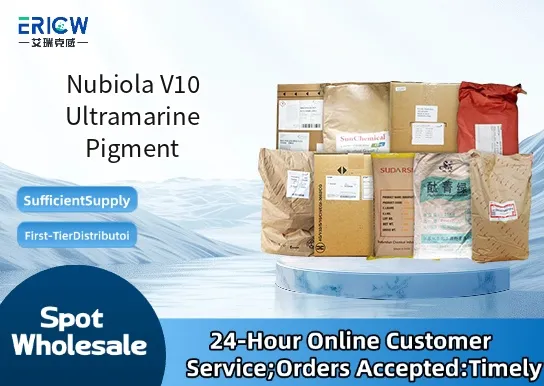
Exceptional lightfastness and weather resistance for long-term color stability.
High tinctorial strength with intense, clean blue-violet hue.
Excellent thermal stability up to 180°C in polymer processing applications.
Low water solubility and superior alkali resistance for demanding industrial environments.
Consistent particle size distribution ensuring uniform dispersion and minimal agglomeration.
Plastics: Polyolefins, PVC, PS, and engineering resins.
Powder coatings: High-gloss architectural and appliance finishes.
Inks: Offset, flexographic, and gravure printing inks for packaging.
Construction materials: Colored concrete, stucco, and dry-mix mortars.
Masterbatches: Concentrated colorants for injection molding and extrusion.
| Chemical Type | Sodium aluminosilicate sulfide (synthetic ultramarine) |
| Product Form | Fine free-flowing powder |
| Appearance | Deep violet-blue granular powder |
| Primary Applications | Plastics, coatings, inks, construction materials |
| Key Features | Lightfastness ≥7 (ISO 105-B02), Heat stability ≤180°C |
| Benefits | Non-toxic, heavy-metal-free, REACH-compliant |
| pH Stability Range | 5.5–9.5 (stable in neutral to mildly alkaline media) |
| Specific Gravity | 2.3–2.5 g/cm³ |
Q1: What is the primary chemical composition and structural basis of Nubiola V10?
A: Nubiola V10 is a synthetic ultramarine pigment based on a sodium aluminosilicate framework with polysulfide chromophores. Its intense blue hue arises from the trapped S₃⁻ radical anions within the β-cage structure of the sodalite lattice.
Q2: Is Nubiola V10 suitable for use in food-contact plastics or inks?
A: Nubiola V10 is not approved for direct food-contact applications under major global regulatory frameworks. It is intended for non-food-contact industrial uses such as architectural coatings, artist materials, and decorative plastics where regulatory compliance does not require food-grade certification.
Q3: How does Nubiola V10 perform under acidic conditions?
A: Like most ultramarine pigments, Nubiola V10 is sensitive to low pH environments and may undergo chromophore degradation in acidic media (pH < 5), resulting in color fading or greening. It is recommended for neutral to alkaline systems and should be avoided in formulations containing strong acids or acid catalysts.
Q4: What dispersion methods are recommended for optimal color development in polymer systems?
A: For best results in thermoplastics and thermosets, high-shear compounding—such as twin-screw extrusion—is recommended. Pre-dispersing Nubiola V10 in compatible carrier resins or using surface-treated grades can further enhance dispersion uniformity and minimize agglomeration.
Q5: What is the typical dosage range when using Nubiola V10 in industrial coatings?
A: Dosage depends on desired opacity, shade intensity, and binder system, but it is typically used at low concentrations—generally ranging from 0.1% to 2% by weight relative to total formulation solids.
Contact With Us:
E-mail: wangxingqiang@ericwchem.com
Have a Questions? Call Us:
Add:
Building A1, Jiete Industrial Park, Huangpu District, Guangzhou City, Guangdong Province, China