English
 Español
 tiếng việt
 русский
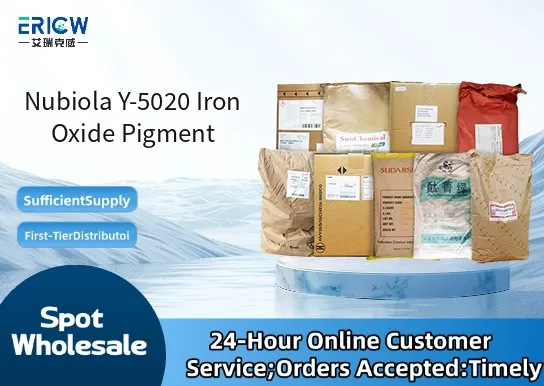
High chromatic strength with consistent reddish-brown hue for reliable color matching.
Excellent thermal stability up to 250°C, suitable for high-temperature processing.
Outstanding UV resistance and weatherfastness in exterior applications.
Low soluble salt content ensures superior corrosion inhibition in protective coatings.
Optimized particle size distribution for enhanced dispersion and gloss retention in binders.
Architectural and industrial solvent-based and waterborne paints.
Concrete and cement-based products including paving stones and façade elements.
Plastic compounds for outdoor profiles, pipes, and agricultural films.
Anti-corrosive primers and marine-grade protective coatings.
Ceramic glazes and low-fire clay bodies requiring stable iron oxide coloration.
| Chemical Type | Alpha-Fe₂O₃ (Hematite) |
| Product Form | Free-flowing dry powder |
| Appearance | Reddish-brown granular powder |
| Primary Applications | Pigments for coatings, construction materials, plastics, and ceramics |
| Key Features | Thermal stability, UV resistance, low soluble salts, high tinting strength |
| Benefits | Color consistency, reduced binder demand, extended service life in aggressive environments |
| pH (10% aqueous suspension) | 6.5–7.5 |
| Volatile Matter (105°C, 2 h) | < 0.5% |
Q1: What is the primary chemical composition and crystal structure of Nubiola Y-5020?
A: Nubiola Y-5020 is a synthetic iron oxide pigment based predominantly on alpha-phase hematite (α-Fe₂O₃), offering high chromatic strength, excellent lightfastness, and thermal stability typical of crystalline iron oxides.
Q2: Is Y-5020 suitable for use in exterior architectural coatings?
A: Yes — its robust UV resistance, low solubility, and inertness make it well-suited for long-term outdoor applications, including facade paints, stucco, and concrete colorants where weathering performance is critical.
Q3: How does Y-5020 perform in alkaline systems such as cementitious or lime-based mortars?
A: It demonstrates excellent compatibility and stability in highly alkaline environments, maintaining consistent color development without fading or discoloration during curing or prolonged exposure to pH >12.
Q4: What dispersion behavior can be expected in water-based versus solvent-based systems?
A: Y-5020 disperses readily in both aqueous and organic media with appropriate wetting agents; in water-based systems, it typically achieves stable suspension with anionic or polymeric dispersants, while in solvent-based formulations, it responds well to fatty acid or amine-treated dispersion aids.
Q5: What is the recommended dosage range for achieving optimal opacity and color intensity?
A: Dosage depends on formulation requirements and desired shade depth, but it is generally used at low concentrations — typically ranging from 0.1% to 2% by weight in most coating, construction, and plastic applications.
Contact With Us:
E-mail: wangxingqiang@ericwchem.com
Have a Questions? Call Us:
Add:
Building A1, Jiete Industrial Park, Huangpu District, Guangzhou City, Guangdong Province, China