English
 Español
 tiếng việt
 русский
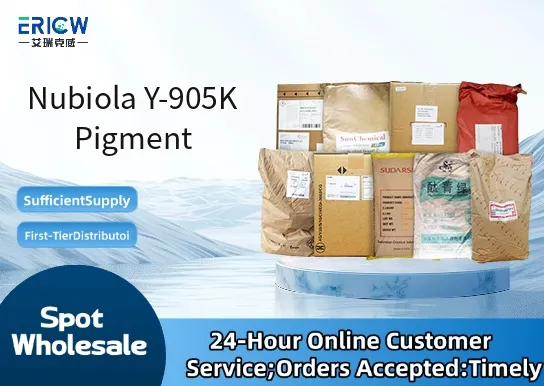
High chroma yellow shade with excellent lightfastness (ISO 105-B02, Grade 7–8).
Outstanding thermal stability up to 220 °C, suitable for high-temperature processing.
Low volatility and minimal migration in polymer matrices, ensuring color consistency.
Optimized particle size distribution for superior dispersion and gloss retention.
Compliant with REACH and RoHS directives; free of heavy metals and restricted aromatic amines.
Polypropylene (PP) and polyethylene (PE) injection-molded automotive interior components.
Engineering plastics including ABS and polycarbonate for consumer electronics housings.
Masterbatch formulations for food-contact-compliant packaging films.
Industrial coatings requiring weather resistance and UV durability.
Textile printing pastes for polyester and polyamide substrates.
| Chemical Type | Azo pigment (Benzimidazolone derivative) |
| Product Form | Free-flowing powder |
| Appearance | Bright yellow powder, non-dusting |
| Primary Applications | Polymer coloring, industrial coatings, textile printing |
| Key Features | High heat stability, low migration, excellent dispersibility |
| Benefits | Consistent batch-to-batch color, reduced processing defects, extended service life |
| Regulatory Compliance | REACH registered, RoHS 2011/65/EU compliant, FDA non-listed (for indirect food contact) |
| Storage Conditions | Store in cool, dry place below 30 °C; protect from moisture and direct sunlight |
Q1: What is the primary chemical nature of Nubiola Y-905K pigment?
A: Nubiola Y-905K is an inorganic yellow iron oxide-based pigment, engineered for high chroma, excellent lightfastness, and thermal stability—characteristic of premium-grade synthetic iron oxides.
Q2: Is Nubiola Y-905K suitable for use in food-contact plastics or coatings?
A: While Y-905K complies with general purity requirements for pigments used in indirect food-contact applications, formal regulatory clearance depends on the final formulation, processing conditions, and applicable regional regulations—users must conduct full compliance validation per their specific application and jurisdiction.
Q3: How does Y-905K perform under elevated processing temperatures?
A: This pigment demonstrates strong thermal stability and retains its color integrity during standard polymer processing—including extrusion and injection molding at typical temperatures up to 250 °C—making it well-suited for polyolefins, engineering thermoplastics, and masterbatch applications.
Q4: What dispersion methods are recommended for optimal performance in liquid systems?
A: For paints, inks, and coatings, high-shear dispersion using appropriate wetting agents and dispersants is recommended; pre-dispersed pastes or millbase formulations typically yield superior color development and consistency compared to dry addition.
Contact With Us:
E-mail: wangxingqiang@ericwchem.com
Have a Questions? Call Us:
Add:
Building A1, Jiete Industrial Park, Huangpu District, Guangzhou City, Guangdong Province, China