English
 Español
 tiếng việt
 русский
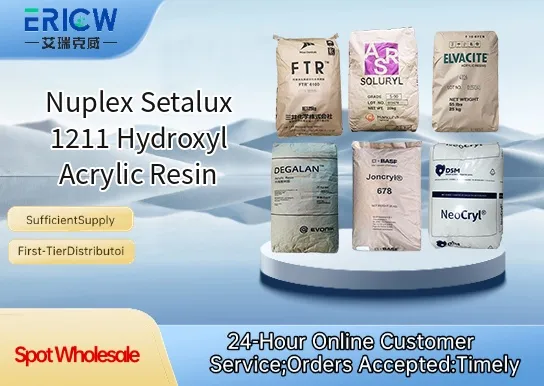
High hydroxyl functionality for robust crosslinking with amino and isocyanate curing agents.
Excellent compatibility with common solvent-based coating systems including polyester, alkyd, and melamine resins.
Superior weather resistance and UV stability for long-term gloss and color retention.
Good flow and leveling characteristics enabling high-quality film formation in industrial finishes.
Consistent batch-to-batch performance ensured by stringent quality control during polymerization.
Automotive OEM and refinish topcoats requiring high durability and appearance.
Industrial maintenance coatings for metal substrates exposed to harsh environments.
General-purpose coil coatings for pre-painted steel and aluminum applications.
High-performance can and closure coatings demanding excellent adhesion and corrosion resistance.
Architectural metal façade coatings requiring long-term gloss retention and chalking resistance.
| Chemical Type | Hydroxyl-functional acrylic copolymer |
| Product Form | Liquid resin solution |
| Appearance | Clear to pale yellow viscous liquid |
| Primary Applications | Two-component polyurethane and amino-cured industrial coatings |
| Key Features | High OH value, low VOC formulation capability, good solubility in aromatic and ester solvents |
| Benefits | Enables high-gloss, durable films with excellent chemical and abrasion resistance |
| Solvent System | Typically supplied in xylene / butyl acetate blend (custom solvent options available) |
| Storage Stability | Stable for ≥12 months at 15–25°C in sealed containers |
Q1: What is the primary function of Setalux 1211 in coating formulations?
A: Setalux 1211 serves as a hydroxyl-functional acrylic resin designed to act as a reactive binder in two-component polyurethane and polyester-based coating systems. It contributes to film formation, enhances crosslink density, and supports improved hardness, chemical resistance, and gloss retention.
Q2: Is Setalux 1211 compatible with common isocyanate hardeners?
A: Yes, Setalux 1211 is formulated for compatibility with standard aliphatic and aromatic isocyanate crosslinkers, including HDI trimer, IPDI biuret, and TDI-based hardeners. Optimal performance is achieved when matched with hardeners offering appropriate NCO:OH stoichiometric balance and cure profile requirements.
Q3: How does Setalux 1211 compare to conventional hydroxyl acrylic resins in terms of viscosity and solids content?
A: Setalux 1211 is supplied as a medium-viscosity liquid with moderate solids content, enabling good formulation flexibility and ease of incorporation into solvent-borne systems. Its rheological profile supports efficient mixing and reduces the need for excessive thinning agents compared to higher-viscosity alternatives.
Q4: Can Setalux 1211 be used in low-VOC or high-solids coating applications?
A: Yes — its balanced molecular weight and functional group distribution make it suitable for reformulation into lower-VOC and higher-solids systems. Formulators often select it to help maintain performance while reducing solvent demand, though final VOC compliance depends on the full formulation and regulatory jurisdiction.
Contact With Us:
E-mail: wangxingqiang@ericwchem.com
Have a Questions? Call Us:
Add:
Building A1, Jiete Industrial Park, Huangpu District, Guangzhou City, Guangdong Province, China