English
 Español
 tiếng việt
 русский
High-gloss, durable film formation with excellent clarity and color retention.
Excellent compatibility with common solvent-based coating systems and crosslinkers.
Good flow and leveling characteristics for smooth, defect-free finishes.
Enhanced weather resistance and UV stability for long-term outdoor performance.
Optimized molecular weight distribution for balanced hardness and flexibility.
Automotive refinish topcoats and clearcoats.
Industrial maintenance coatings for metal substrates.
General-purpose solvent-borne decorative coatings.
Plastic coatings requiring high adhesion and gloss.
High-performance coil coatings for architectural applications.
| Chemical Type | Solvent-borne acrylic copolymer |
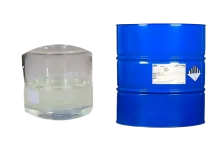
| Product Form | Liquid resin solution |
| Appearance | Clear, pale yellow liquid |
| Solvent System | Aromatic hydrocarbon blend (e.g., xylene/toluene) |
| Solids Content | ~50% w/w (typical) |
| Viscosity (25°C) | ~80–120 mPa·s (Brookfield RV, spindle #3, 20 rpm) |
| Acid Value | ~5–10 mg KOH/g |
| Primary Applications | High-gloss automotive and industrial topcoats |
Q1: What is the primary application of Setalux 1795 VX-74 in coating systems?
A: Setalux 1795 VX-74 is a solvent-borne acrylic resin specifically designed as a rheology modifier and film-forming binder in high-performance industrial coatings, particularly where excellent flow, leveling, and gloss retention are required—such as in automotive refinish and premium general industrial topcoats.
Q2: Is Setalux 1795 VX-74 compatible with common crosslinkers used in thermoset acrylic systems?
A: Yes, it is formulated to be compatible with standard amino crosslinkers (e.g., melamine-formaldehyde resins) and isothermal or forced-dry curing systems. Compatibility should always be verified experimentally within the final formulation due to variations in solvent blends and additive packages.
Q3: How does Setalux 1795 VX-74 influence viscosity and sag resistance in high-solids formulations?
A: It provides controlled pseudoplastic behavior—enhancing low-shear viscosity for anti-sag performance while maintaining good high-shear flow for application. Its effect is most pronounced when incorporated at typical use levels, generally ranging from 0.1% to 2% by weight relative to total resin solids.
Q4: Can this resin be used in UV-curable or waterborne systems?
A: No—Setalux 1795 VX-74 is a solvent-based acrylic resin and is not suitable for waterborne or UV-curable formulations. It requires organic solvents for dissolution and is incompatible with aqueous media or photoinitiator systems.
Contact With Us:
E-mail: wangxingqiang@ericwchem.com
Have a Questions? Call Us:
Add:
Building A1, Jiete Industrial Park, Huangpu District, Guangzhou City, Guangdong Province, China