English
 Español
 tiếng việt
 русский
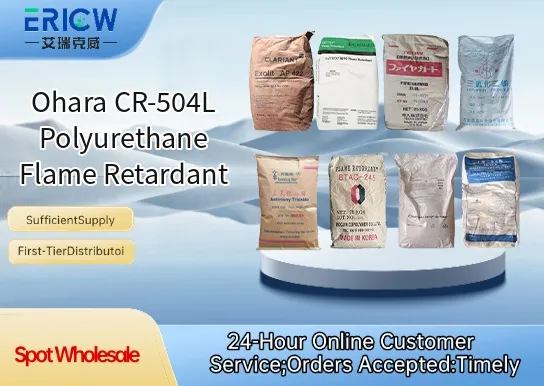
Halogen-free formulation ensures low smoke density and reduced toxic gas emission during combustion.
Excellent compatibility with flexible and rigid polyurethane foam systems without compromising physical properties.
Effective flame retardancy achieving UL 94 HF-1 and FMVSS 302 compliance in standard formulations.
Thermally stable up to 220°C, supporting conventional PU processing conditions including slabstock and molded foam production.
Low volatility and minimal migration, contributing to long-term flame-retardant performance retention.
Flexible polyurethane foam for automotive seating and interior trim.
Rigid polyurethane insulation panels used in building envelope and cold storage applications.
Upholstered furniture foam meeting CAL TB 117-2013 and UK Furniture & Furnishings (Fire) (Safety) Regulations.
Transportation interior components including railcar and bus seating foams.
Medical equipment cushioning requiring low-smoke, halogen-free fire safety performance.
| Chemical Type | Organophosphorus-based flame retardant |
| Product Form | Light yellow to pale amber viscous liquid |
| Appearance | Clear, homogeneous liquid at room temperature |
| Density (25°C) | 1.28–1.32 g/cm³ |
| Viscosity (25°C) | 350–550 mPa·s |
| Phosphorus Content | 16.5–17.5 wt% |
| Flash Point (COC) | ≥220°C |
| Storage Stability | Stable for ≥12 months at 5–30°C in sealed containers |
Q1: What types of polyurethane systems is CR-504L compatible with?
A: CR-504L is designed for use in flexible and rigid polyurethane foams, including slabstock, molded, and integral skin formulations. It demonstrates good compatibility with common polyol blends and isothiocyanate-based curing systems, though compatibility testing under actual processing conditions is recommended.
Q2: How does CR-504L achieve flame retardancy without halogenated chemistry?
A: CR-504L functions primarily through a condensed-phase mechanism, promoting char formation and reducing fuel release during thermal decomposition. Its phosphorus- and nitrogen-containing structure contributes to synergistic flame-inhibiting effects while maintaining halogen-free status.
Q3: Is CR-504L suitable for low-emission or indoor air quality–sensitive applications?
A: Yes — CR-504L is formulated to minimize volatile organic compound (VOC) contribution and exhibits low odor development during processing and in final products. It supports compliance with general indoor air quality expectations for furniture and building insulation applications.
Q4: What is the typical dosage range for effective flame performance?
A: Effective loading generally ranges from 0.1% to 2% by weight relative to total formulation mass, depending on foam density, polymer architecture, and target fire performance (e.g., UL 94, CAL 117). Optimization requires empirical evaluation within the specific system.
Q5: Does CR-504L affect the physical properties of cured polyurethane foam?
A: At recommended dosages, CR-504L typically has minimal impact on key mechanical properties such as tensile strength, elongation, and compression set. However, slight reductions in resilience or increases in compression hardness may occur in some high-loading scenarios, warranting full-scale performance validation.
Contact With Us:
E-mail: wangxingqiang@ericwchem.com
Have a Questions? Call Us:
Add:
Building A1, Jiete Industrial Park, Huangpu District, Guangzhou City, Guangdong Province, China