English
 Español
 tiếng việt
 русский
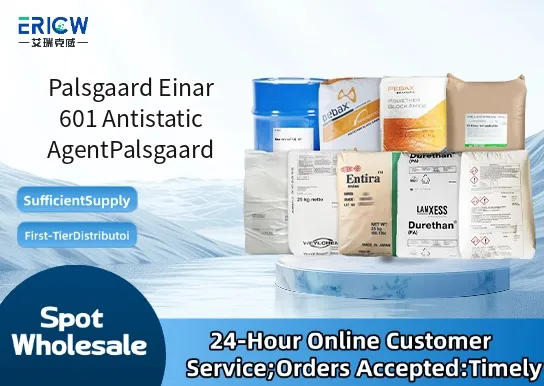
Non-ionic, glycerol ester–based antistatic agent with excellent compatibility in polyolefin and styrenic polymers.
Provides rapid and durable static dissipation without blooming or surface migration issues.
Food-contact compliant in accordance with FDA 21 CFR §178.3740 and EU Regulation (EC) No 10/2011 for indirect food contact applications.
Thermally stable up to 230 °C, suitable for high-temperature extrusion and injection molding processes.
Low volatility and non-staining—preserves product aesthetics and processing equipment integrity.
Polypropylene (PP) and polyethylene (PE) packaging films requiring static control during high-speed filling and packaging.
Rigid containers for pharmaceuticals, cosmetics, and dry food products where dust adhesion and electrostatic discharge must be minimized.
Injection-molded automotive interior components (e.g., trim, dashboards) to prevent dust accumulation and improve surface cleanliness.
Electronics packaging trays and carriers where ESD-sensitive components require low-charging, dissipative polymer solutions.
Blown and cast film applications in cleanroom and medical device packaging environments.
| Chemical Type | Glycerol mono- and di-esters of fatty acids (predominantly C16–C18) |
| Product Form | Pellets |
| Appearance | Off-white to light beige, free-flowing cylindrical pellets |
| Primary Applications | Polyolefins (PP, HDPE, LDPE), PS, ABS, and SAN |
| Key Features | Non-ionic, halogen-free, non-volatile, low odor |
| Benefits | Reduces surface resistivity to 10¹⁰–10¹¹ Ω/sq; enhances processability and end-product cleanliness |
| Recommended Dosage | 0.2–1.0 wt% depending on polymer type and static performance requirements |
| Storage Conditions | Store in original sealed packaging at 5–25 °C; protect from moisture and direct sunlight |
Contact With Us:
E-mail: wangxingqiang@ericwchem.com
Have a Questions? Call Us:
Add:
Building A1, Jiete Industrial Park, Huangpu District, Guangzhou City, Guangdong Province, China