English
 Español
 tiếng việt
 русский
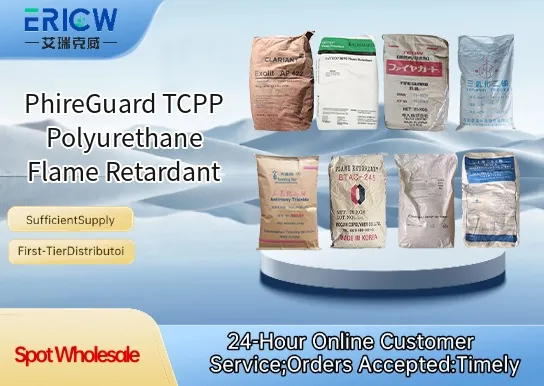
High-efficiency flame retardancy with proven performance in flexible and rigid polyurethane foams.
Excellent compatibility and dispersion stability in PU systems without phase separation or blooming.
Low volatility and minimal migration, ensuring long-term flame-retardant efficacy and product integrity.
Halogen-free formulation supporting compliance with RoHS, REACH, and other major environmental regulations.
Good hydrolytic stability and thermal resistance up to 180 °C during typical foam processing conditions.
Flexible polyurethane foam for upholstered furniture and automotive seating.
Rigid polyurethane insulation boards used in building envelope and cold storage applications.
Spray-applied polyurethane foam (SPF) for roofing and industrial insulation.
Integral skin and microcellular PU foams for transportation interior components.
PU-based adhesives and sealants requiring fire-safe performance in construction assemblies.
| Chemical Type | Tris(1-chloro-2-propyl) phosphate (TCPP) |
| Product Form | Liquid |
| Appearance | Clear, colorless to pale yellow liquid |
| Density (20 °C) | 1.27–1.29 g/cm³ |
| Viscosity (25 °C) | 35–45 cP |
| Chlorine Content | ≥30.5 wt% |
| Acid Value | ≤0.1 mg KOH/g |
| Flash Point (COC) | ≥220 °C |
Q1: What is the primary mechanism of flame retardancy for PhireGuard TCPP in polyurethane foams?
A: PhireGuard TCPP functions primarily through a gas-phase radical quenching mechanism, interrupting combustion chain reactions during thermal decomposition. It also contributes to char formation in some formulations, enhancing thermal barrier properties.
Q2: Is PhireGuard TCPP compatible with common polyurethane foam systems, including flexible slabstock and rigid insulation foams?
A: Yes — PhireGuard TCPP exhibits excellent compatibility with both flexible and rigid polyurethane foam systems. It integrates well into standard polyol blends and remains stable during processing without phase separation or significant viscosity impact.
Q3: How does PhireGuard TCPP compare to reactive flame retardants in terms of migration resistance?
A: As an additive flame retardant, PhireGuard TCPP is physically blended rather than chemically bound. While it offers good initial performance, long-term migration resistance is lower than that of reactive alternatives — formulation optimization and polymer matrix selection are recommended to minimize leaching in demanding applications.
Q4: What are typical handling and storage recommendations for PhireGuard TCPP?
A: Store in a cool, dry, well-ventilated area away from direct sunlight and strong oxidizers. Keep containers tightly sealed when not in use. Standard industrial PPE — including nitrile gloves and safety goggles — is recommended during handling to avoid skin or eye contact.
Q5: Can PhireGuard TCPP be used in combination with other flame retardants to achieve synergistic effects?
A: Yes — PhireGuard TCPP is commonly combined with solid-phase flame retardants such as melamine derivatives or metal hydroxides to enhance overall fire performance while reducing total additive loading. Compatibility and dispersion should be validated in the target formulation prior to scale-up.
Contact With Us:
E-mail: wangxingqiang@ericwchem.com
Have a Questions? Call Us:
Add:
Building A1, Jiete Industrial Park, Huangpu District, Guangzhou City, Guangdong Province, China