English
 Español
 tiếng việt
 русский
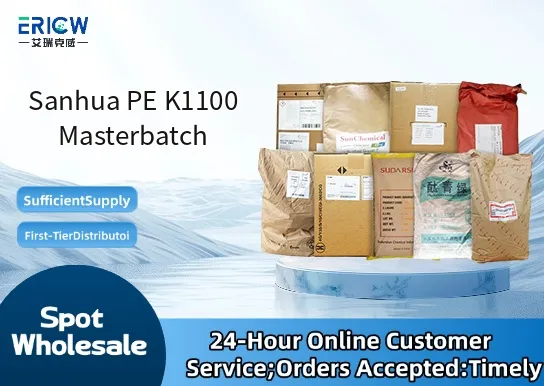
Highly concentrated pigment dispersion for consistent coloration in polyethylene (PE) resins.
Excellent thermal stability up to 280°C, ensuring minimal degradation during extrusion and injection molding.
Low dust formulation with optimized carrier compatibility for smooth feeding and reduced machine fouling.
Good migration resistance, maintaining color integrity in contact-sensitive applications such as food packaging films.
RoHS and REACH compliant, free from heavy metals and restricted substances per current regulatory standards.
Blown and cast polyethylene films for retail bags, agricultural mulch, and laminated packaging.
Injection-molded PE containers including bottles, caps, and household storage items.
Extruded PE profiles such as pipes, conduits, and geomembranes.
Rotomolded PE tanks, playground equipment, and large industrial parts.
HDPE and LDPE blow-molded bottles for detergents, shampoos, and personal care products.
| Chemical Type | Polyethylene-based masterbatch |
| Product Form | Free-flowing granules |
| Appearance | Uniform colored granules, no visible specks or agglomerates |
| Carrier Resin | LDPE (Melt Flow Index: 1.5–3.0 g/10 min, ASTM D1238, 190°C/2.16 kg) |
| Typical Loading Ratio | 1–4 wt% depending on final color depth and application |
| Moisture Content | ≤ 0.2% (by weight, gravimetric method) |
| Heavy Metals (Pb, Cd, Hg, Cr⁶⁺) | Below detection limit per EN 71-3 and RoHS Annex II |
| Storage Conditions | Store in dry, ventilated area at ≤ 30°C; use within 12 months of production date |
Q1: What is the primary function of Sanhua PE K1100 Masterbatch in polyethylene applications?
A: Sanhua PE K1100 Masterbatch is designed to enhance processability and surface quality of PE-based compounds, particularly by improving melt flow consistency and reducing die buildup during extrusion or injection molding.
Q2: Is this masterbatch compatible with all types of polyethylene resins?
A: Sanhua PE K1100 demonstrates good compatibility with common PE grades including LDPE, LLDPE, and HDPE. Compatibility with specialty PE copolymers or highly filled formulations should be verified through application testing.
Q3: What is the typical dosage range for optimal performance?
A: Dosage depends on formulation requirements and processing conditions, but it is typically used at low concentrations—generally ranging from 0.1% to 2% by weight of the base polymer.
Q4: Does Sanhua PE K1100 affect the mechanical properties of the final PE product?
A: When used within recommended dosage ranges, Sanhua PE K1100 is formulated to maintain key mechanical properties such as tensile strength and impact resistance, with minimal influence on crystallinity or long-term thermal stability.
Q5: Can this masterbatch be used in food-contact or medical-grade PE applications?
A: Sanhua PE K1100 is not pre-certified for food-contact or medical applications. Customers intending such use must conduct full regulatory evaluation—including migration testing and compliance verification—according to applicable regional requirements.
Contact With Us:
E-mail: wangxingqiang@ericwchem.com
Have a Questions? Call Us:
Add:
Building A1, Jiete Industrial Park, Huangpu District, Guangzhou City, Guangdong Province, China