English
 Español
 tiếng việt
 русский
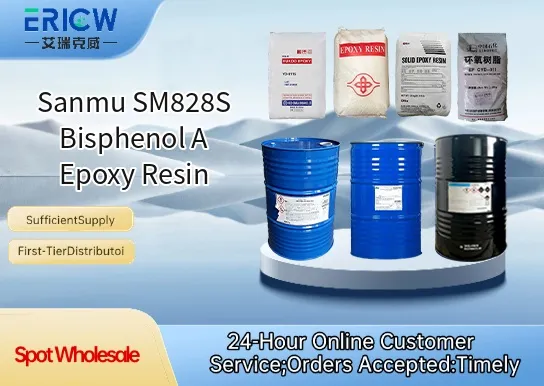
High purity bisphenol A-based epoxy resin with consistent molecular weight distribution.
Excellent thermal stability and low volatility, suitable for high-temperature processing.
Low chloride content (< 800 ppm), ensuring superior electrical insulation properties.
Good compatibility with common amine and anhydride curing agents.
Optimized viscosity (10,000–14,000 mPa·s at 25°C) for enhanced processability in coating and casting applications.
Electrical insulating varnishes for motors, transformers, and generators.
Structural adhesives in aerospace and automotive composites.
High-performance protective coatings for marine and industrial steel structures.
Encapsulants and potting compounds for electronic components and LED modules.
Reinforced thermoset composites in wind turbine blade manufacturing.
| Chemical Type | Bisphenol A diglycidyl ether (DGEBA) |
| Product Form | Clear to pale yellow viscous liquid |
| Appearance | Homogeneous, transparent, free from gel or sediment |
| Epoxy Equivalent Weight (EEW) | 187–193 g/eq |
| Viscosity (25°C) | 10,000–14,000 mPa·s |
| Chloride Content | ≤ 800 ppm |
| Softening Point | 12–16°C |
| Color (Gardner) | ≤ 2 |
Q1: What is the primary application niche for Sanmu SM828S?
A: Sanmu SM828S is specifically formulated for high-performance protective coatings and industrial adhesives where excellent chemical resistance, strong substrate adhesion, and good mechanical toughness are required—particularly in metal primers, marine coatings, and structural bonding systems.
Q2: How does SM828S differ from standard liquid DGEBA epoxy resins?
A: SM828S is a refined, low-viscosity Bisphenol A epoxy resin with tightly controlled epoxide equivalent weight and minimal volatile content, offering improved batch-to-batch consistency and enhanced reactivity with amine and anhydride hardeners compared to generic-grade DGEBA resins.
Q3: Is SM828S suitable for food-contact or potable water applications?
A: SM828S is not pre-certified for direct food-contact or potable water applications. Its suitability for such uses depends on full formulation evaluation, final cured system testing, and compliance verification with applicable regional regulatory frameworks by the end-user or formulator.
Q4: What hardeners are commonly used with SM828S?
A: SM828S exhibits broad compatibility with aliphatic and cycloaliphatic amines, polyamides, and anhydrides. Selection depends on the target performance profile—e.g., fast-cure systems often use aliphatic amines, while high-temperature resistance may favor aromatic amines or anhydrides.
Contact With Us:
E-mail: wangxingqiang@ericwchem.com
Have a Questions? Call Us:
Add:
Building A1, Jiete Industrial Park, Huangpu District, Guangzhou City, Guangdong Province, China