English
 Español
 tiếng việt
 русский
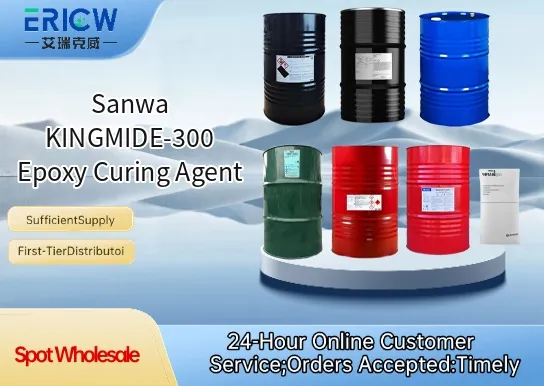
Low-viscosity liquid formulation for excellent mixing and processing with standard epoxy resins.
Fast-reacting amine-based chemistry enabling reduced cure times at ambient or mild elevated temperatures.
Provides high crosslink density, resulting in superior chemical resistance and mechanical strength in cured systems.
Low volatility and low odor profile—designed for improved workplace safety and compliance with industrial hygiene standards.
Good compatibility with bisphenol-A and bisphenol-F epoxy resins, supporting broad formulation flexibility.
High-performance industrial floor coatings requiring rapid return-to-service and abrasion resistance.
Electrical insulation encapsulants and potting compounds for transformers and power electronics.
Structural adhesives in automotive and rail components where thermal stability and bond durability are critical.
Composite matrix resins for wind turbine blade bonding and repair applications.
Marine-grade protective coatings for offshore platforms and ship hulls exposed to harsh saline environments.
| Chemical Type | Aliphatic polyamine adduct |
| Product Form | Liquid |
| Appearance | Clear, pale yellow to amber liquid |
| Primary Applications | Room-temperature and heat-cured epoxy systems |
| Key Features | Low viscosity, fast cure, low exotherm, high Tg capability |
| Benefits | Improved productivity, enhanced chemical resistance, reduced VOC impact |
| Density (25°C) | Approx. 0.98–1.02 g/cm³ |
| Reactivity Profile | Compatible with standard DGEBA-type epoxy resins at 100:20–30 (resin:curing agent) w/w ratio |
Q1: What type of epoxy systems is KINGMIDE-300 designed for?
A: KINGMIDE-300 is a latent, dicyandiamide-based curing agent formulated for use with standard bisphenol-A and bisphenol-F epoxy resins. It is particularly suited for one-component (1K) heat-curable systems requiring extended pot life at ambient temperature and rapid crosslinking upon thermal activation.
Q2: What is the typical activation temperature range for full cure?
A: Full network development generally occurs between 140 °C and 180 °C, depending on formulation composition and desired cure speed. Lower temperatures may be used for extended dwell times, while higher temperatures enable faster throughput in industrial oven or press applications.
Q3: How should KINGMIDE-300 be dispersed into the epoxy resin?
A: For optimal homogeneity and stability, KINGMIDE-300 should be dry-blended with the solid epoxy resin prior to melt-mixing, or dispersed under high-shear mixing in molten resin above its softening point. Pre-dilution in a low-viscosity reactive diluent or solvent is not recommended unless validated for compatibility and volatility control.
Q4: Does KINGMIDE-300 require a co-catalyst or accelerator?
A: While KINGMIDE-300 can function as a standalone curing agent, performance enhancement—such as reduced activation temperature or improved flexibility—may be achieved by incorporating small amounts of selected imidazole or urea derivatives. The need for and selection of accelerators depends on the specific application requirements and must be verified through formulation testing.
Contact With Us:
E-mail: wangxingqiang@ericwchem.com
Have a Questions? Call Us:
Add:
Building A1, Jiete Industrial Park, Huangpu District, Guangzhou City, Guangdong Province, China