English
 Español
 tiếng việt
 русский
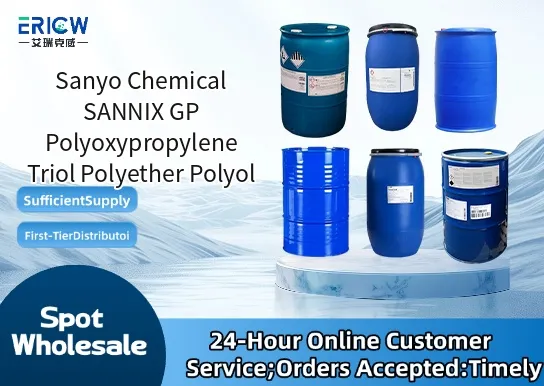
Highly consistent triol functionality ensures excellent crosslinking density and dimensional stability in rigid polyurethane foams.
Low monool content minimizes chain termination, enhancing polymer backbone uniformity and mechanical performance.
Optimized molecular weight distribution delivers balanced reactivity and processing window for continuous slabstock and molded foam production.
Excellent hydrolytic stability due to saturated polyoxypropylene backbone, supporting long-term storage and formulation integrity.
Low volatile organic compound (VOC) profile, meeting stringent industrial emission requirements for eco-conscious manufacturing.
Rigid polyurethane insulation foams for refrigeration cabinets and building envelope systems.
Structural spray-applied rigid foams for roofing and industrial pipe insulation.
Reaction injection molding (RIM) components requiring high heat resistance and low thermal conductivity.
Cast elastomer systems demanding dimensional fidelity and compression set resistance.
Adhesives and sealants where controlled reactivity and cohesive strength are critical.
| Chemical Type | Polyoxypropylene-based triol polyether polyol |
| Product Form | Liquid |
| Appearance | Clear, light amber liquid |
| Hydroxyl Number (mg KOH/g) | 330–350 |
| Functionality | ~3.0 |
| Acid Number (mg KOH/g) | ≤ 0.1 |
| Water Content (% w/w) | ≤ 0.10 |
| Viscosity at 25°C (mPa·s) | 450–650 |
Contact With Us:
E-mail: wangxingqiang@ericwchem.com
Have a Questions? Call Us:
Add:
Building A1, Jiete Industrial Park, Huangpu District, Guangzhou City, Guangdong Province, China