English
 Español
 tiếng việt
 русский
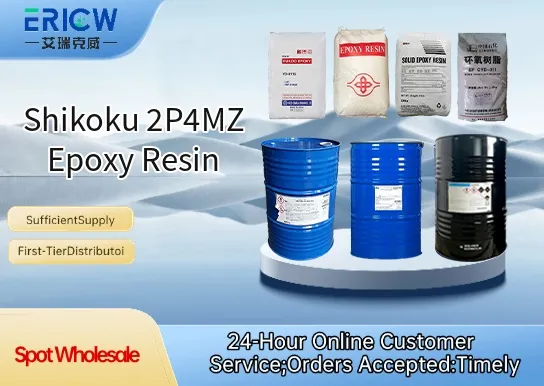
High-purity imidazole-type latent curing agent specifically designed for epoxy resin systems.
Excellent storage stability at room temperature with extended pot life under ambient conditions.
Activates rapidly at elevated temperatures (typically 120–150 °C), enabling precise thermal control of cure kinetics.
Delivers superior thermal and mechanical performance in cured composites, including high glass transition temperature (Tg).
Low volatility and minimal odor, supporting safer handling and compliance with industrial hygiene standards.
Prepregs and B-staged laminates for aerospace and high-performance printed circuit boards (PCBs).
Structural adhesives requiring controlled cure onset and high bond strength at elevated service temperatures.
Encapsulants and potting compounds for power electronics and electric vehicle (EV) components.
Carbon fiber reinforced polymer (CFRP) matrix resins in automotive and wind energy applications.
Electrically insulating coatings and dielectric films for semiconductor packaging substrates.
| Chemical Type | Imidazole derivative (2-phenyl-4-methylimidazole) |
| Product Form | White to off-white crystalline powder |
| Appearance | Free-flowing crystalline solid |
| Molecular Weight | 158.2 g/mol |
| Melting Point | 116–119 °C |
| Assay (Purity) | ≥ 99.0% (by HPLC) |
| Moisture Content | ≤ 0.5% (by Karl Fischer titration) |
| Primary Function | Latent thermal curing agent for epoxy resins |
Q1: What is the primary function of Shikoku 2P4MZ in epoxy systems?
A: Shikoku 2P4MZ is a latent imidazole-type curing agent specifically designed for thermally activated epoxy resin curing. It enables long pot life at ambient temperatures while delivering rapid, efficient crosslinking upon heating—making it ideal for prepreg, filament winding, and high-performance composite manufacturing.
Q2: How does 2P4MZ compare to conventional imidazole accelerators in terms of latency and reactivity?
A: Compared to standard imidazoles, 2P4MZ offers superior latency—remaining inert during storage and processing at room temperature—while exhibiting sharply increased reactivity above its activation threshold (typically beginning around 120–130 °C). This balance supports extended shelf life and precise process control in automated production environments.
Q3: Is 2P4MZ compatible with common industrial epoxy resins beyond standard DGEBA types?
A: Yes, 2P4MZ demonstrates broad compatibility with diglycidyl ether of bisphenol-A (DGEBA), bisphenol-F, novolac epoxies, and many multifunctional epoxy resins. Its solubility and dispersion behavior support uniform incorporation into both solvent-based and solvent-free formulations.
Q4: What handling precautions should be observed when working with 2P4MZ?
A: As with other reactive organic amines, 2P4MZ should be handled using appropriate personal protective equipment (PPE), including gloves and eye protection. Avoid prolonged or repeated skin contact, and ensure adequate ventilation during weighing and mixing to minimize inhalation exposure.
Contact With Us:
E-mail: wangxingqiang@ericwchem.com
Have a Questions? Call Us:
Add:
Building A1, Jiete Industrial Park, Huangpu District, Guangzhou City, Guangdong Province, China