English
 Español
 tiếng việt
 русский
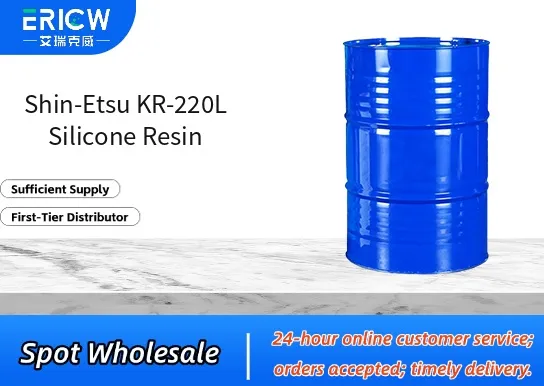
High thermal stability with continuous use up to 200 °C.
Excellent electrical insulation properties even under humid conditions.
Good compatibility with organic resins and pigments for hybrid formulations.
Low volatile content, supporting low-emission coating and encapsulation processes.
Reactive methyl and phenyl groups enabling crosslinking via heat or catalyst.
Heat-resistant coatings for industrial exhaust systems and oven linings.
Electrical insulating varnishes for motors, transformers, and coil winding.
Binders in high-performance silicone-based ceramic coatings.
Matrix resin for flexible, flame-retardant silicone composites.
Base resin in UV-curable silicone hybrid inks for printed electronics.
| Chemical Type | Methyl/phenyl copolymer silicone resin |
| Product Form | Clear to pale yellow liquid |
| Appearance | Homogeneous, transparent liquid |
| Solvent Content | Toluene/xylene blend (approx. 50–60 wt%) |
| Non-Volatile Content | 40–45 wt% (at 150 °C, 3 hr) |
| Viscosity (25 °C) | 80–120 mPa·s |
| Density (25 °C) | 0.92–0.95 g/cm³ |
| Flash Point (Tag Closed Cup) | Approx. 35 °C |
Q1: What is the primary functional role of KR-220L in coating and ink formulations?
A: KR-220L is a methyl-phenyl silicone resin designed primarily to enhance surface hardness, mar resistance, and thermal stability in high-performance coatings and printing inks. It functions as a crosslinking co-resin or additive that improves film integrity without significantly compromising flexibility or adhesion.
Q2: Is KR-220L compatible with common organic resin systems such as acrylics, polyesters, and alkyds?
A: Yes, KR-220L exhibits good compatibility with a broad range of thermosetting and thermoplastic organic resins, including acrylics, polyesters, and alkyds—particularly when used at recommended addition levels. Compatibility should be verified empirically in final formulations due to variations in solvent blends and molecular weight distributions.
Q3: How is KR-220L typically incorporated into a formulation?
A: KR-220L is generally supplied as a solution in aromatic or ketone solvents and can be added directly during the let-down or grinding stage. It is recommended to introduce it under moderate agitation and avoid excessive shear to maintain dispersion stability. Pre-dilution may be beneficial for uniform distribution in low-solvent systems.
Q4: Does KR-220L require high-temperature curing to achieve optimal performance?
A: While KR-220L contributes to improved thermal resilience, it does not strictly require high-temperature curing. It can participate in ambient- or forced-air-cure systems when combined with compatible crosslinkers, though full network development and maximum hardness are generally realized at elevated bake temperatures (e.g., 120–180 °C), depending on the base resin system.
Contact With Us:
E-mail: wangxingqiang@ericwchem.com
Have a Questions? Call Us:
Add:
Building A1, Jiete Industrial Park, Huangpu District, Guangzhou City, Guangdong Province, China