English
 Español
 tiếng việt
 русский
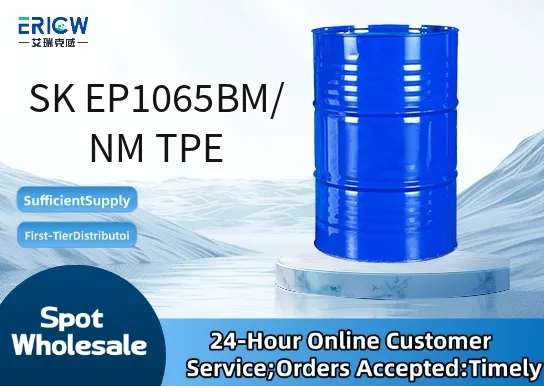
Excellent soft-touch feel with balanced elasticity and compression set resistance
Good processability via injection molding and extrusion without pre-drying
Enhanced adhesion to polypropylene (PP) and polyethylene (PE) substrates
Low extractables and compliant with FDA 21 CFR §177.2600 for food-contact applications
UV-stabilized formulation offering improved weathering resistance in outdoor applications
Soft-grip overmolding for power tools and hand-held appliances
Seals and gaskets in automotive interior components
Food-grade squeeze bottles and dispensing caps
Consumer electronics protective cases and button overlays
Medical device grips and non-critical patient interface components
| Chemical Type | Thermoplastic Elastomer (TPE), SEBS-based |
| Product Form | Pellets |
| Appearance | Off-white, free-flowing granules |
| Hardness (Shore A) | 65 ± 3 |
| Melt Flow Rate (200°C/5 kg) | 22 g/10 min |
| Density | 0.91 g/cm³ |
| Primary Applications | Overmolding, soft-touch components, flexible seals |
| Key Features | PP/PE adhesion, food-contact compliance, low odor |
Q1: What is the primary functional role of SK EP1065BM/NM TPE in polymer formulations?
A: SK EP1065BM/NM TPE is a thermoplastic elastomer designed to serve as a high-performance impact modifier and soft-phase component, particularly in rigid polypropylene (PP) and polyethylene (PE) systems. It enhances toughness, flexibility, and low-temperature performance without significantly compromising stiffness or processability.
Q2: Is SK EP1065BM/NM TPE suitable for food-contact applications?
A: While SK EP1065BM/NM TPE is formulated with non-toxic, FDA-compliant raw materials, final regulatory compliance depends on the complete formulation, processing conditions, and end-use requirements. Customers must conduct full migration testing and obtain certification through their own qualified laboratories for specific food-contact applications.
Q3: How does SK EP1065BM/NM TPE differ from conventional SEBS-based TPEs in terms of processing behavior?
A: SK EP1065BM/NM TPE exhibits lower melt viscosity and improved thermal stability during extrusion and injection molding compared to many standard SEBS grades. This allows for faster cycle times, reduced energy consumption, and better dispersion in PP/PE blends—especially at elevated shear rates typical in high-output production lines.
Q4: What are the recommended drying conditions prior to processing?
A: To ensure optimal mechanical properties and surface quality, it is recommended to dry SK EP1065BM/NM TPE at 70–80 °C for 2–4 hours using a desiccant dryer. Extended drying beyond this range is not required and may contribute to unnecessary thermal history.
Contact With Us:
E-mail: wangxingqiang@ericwchem.com
Have a Questions? Call Us:
Add:
Building A1, Jiete Industrial Park, Huangpu District, Guangzhou City, Guangdong Province, China