English
 Español
 tiếng việt
 русский
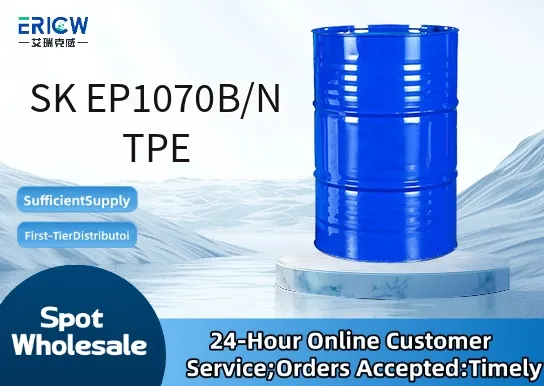
High elasticity and excellent rebound resilience for dynamic sealing and cushioning applications.
Good processability via injection molding and extrusion, with low mold fouling and fast cycle times.
Outstanding soft-touch feel and skin-friendly surface, suitable for consumer-facing components.
Enhanced thermal stability up to 120 °C short-term exposure without significant property degradation.
Halogen-free formulation compliant with RoHS and REACH regulatory requirements.
Soft-grip overmolding for power tools, hand-held appliances, and medical device housings.
Seals and gaskets in automotive interior trim and HVAC systems.
Flexible tubing and bellows for fluid handling in non-pressurized industrial equipment.
Consumer electronics accessories including protective cases, stylus grips, and wearable interfaces.
Household appliance components such as dishwasher door seals and blender jar gaskets.
| Chemical Type | Thermoplastic Elastomer (TPE), SEBS-based |
| Product Form | Pellets |
| Appearance | Light beige, free-flowing granules |
| Hardness (Shore A) | 70 ± 3 |
| Density (g/cm³) | 0.91 ± 0.01 |
| Melt Flow Rate (230 °C/2.16 kg, g/10 min) | 25–35 |
| Tensile Strength (MPa) | 8–10 |
| Elongation at Break (%) | 450–550 |
Q1: What is SK EP1070B/N TPE and how does it differ from conventional plasticizers?
A: SK EP1070B/N TPE is a non-phthalate, high-molecular-weight thermoplastic elastomer modifier designed to enhance flexibility, processability, and low-temperature performance in TPE, TPR, and TPV formulations. Unlike traditional low-MW plasticizers, it offers superior migration resistance and long-term stability due to its polymeric structure and compatibility with styrenic and olefinic base polymers.
Q2: Is SK EP1070B/N TPE suitable for food-contact or medical-grade applications?
A: SK EP1070B/N TPE is formulated without regulated phthalates, heavy metals, or known allergens, and is commonly selected for applications requiring improved regulatory alignment. However, final compliance with food-contact or medical regulations depends on the full formulation, processing conditions, and end-use validation — users must conduct appropriate testing and consult applicable regional requirements before claiming compliance.
Q3: How should SK EP1070B/N TPE be incorporated into TPE compounds?
A: It is typically added during compounding via twin-screw extrusion or internal mixing, either pre-blended with the base polymer or introduced downstream. Good dispersion is achieved at standard melt temperatures (160–220 °C), and dosage generally ranges from 0.1% to 2% by weight depending on the desired balance of elasticity, hardness reduction, and surface feel.
Q4: Does SK EP1070B/N TPE affect the recyclability or reprocessing behavior of TPEs?
A: As a polymeric additive with thermal stability matching common TPE matrices, SK EP1070B/N TPE supports multiple processing cycles without significant degradation or volatilization. It maintains compatibility during regrind incorporation and does not hinder standard TPE recycling streams when used within recommended dosage ranges.
Contact With Us:
E-mail: wangxingqiang@ericwchem.com
Have a Questions? Call Us:
Add:
Building A1, Jiete Industrial Park, Huangpu District, Guangzhou City, Guangdong Province, China