English
 Español
 tiếng việt
 русский
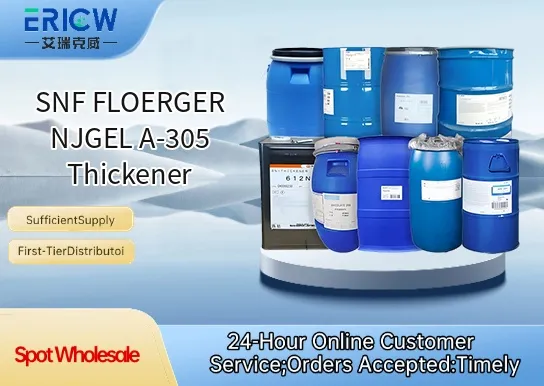
High-shear reversible thickening performance for stable rheology control in aqueous systems.
Excellent compatibility with anionic, nonionic, and cationic surfactants commonly used in industrial formulations.
Low-temperature activation capability, enabling effective viscosity build-up even at 5–10°C.
Non-ionic polymeric structure ensuring minimal sensitivity to pH variations (pH 4–12).
Free of volatile organic compounds (VOCs) and heavy metals, supporting sustainable formulation goals.
Laundry detergents and liquid fabric softeners requiring pumpable yet stable viscosity.
Industrial & institutional (I&I) cleaning solutions, including floor cleaners and disinfectant concentrates.
Agrochemical suspension concentrates (SCs) where sedimentation resistance and spray stability are critical.
Personal care products such as shampoos and body washes requiring mild, non-irritating rheology modifiers.
Water-based coatings and architectural paints needing sag resistance without compromising flow leveling.
| Chemical Type | Non-ionic associative polyurethane thickener (HEUR) |
| Product Form | Clear to slightly hazy viscous liquid |
| Appearance | Light amber to pale yellow liquid |
| Primary Applications | Rheology modifier for aqueous cleaning, personal care, agrochemical, and coating formulations |
| Key Features | Shear-thinning behavior, high efficiency at low dosage (0.2–1.0 wt%), water dispersible |
| Benefits | Improved suspension stability, enhanced foam quality, reduced formulation viscosity hysteresis |
| pH Range (in use) | 4.0 – 12.0 |
| Storage Conditions | Store in original container at 5–30°C; protect from freezing and direct sunlight |
Q1: What type of thickening mechanism does NJGEL A-305 employ?
A: NJGEL A-305 is a non-ionic associative polyurethane (HEUR) thickener that functions through hydrophobic association in aqueous systems, forming a reversible, three-dimensional network that imparts shear-thinning rheology and excellent flow control.
Q2: In which types of formulations is NJGEL A-305 most commonly used?
A: It is widely selected for water-based architectural coatings, industrial maintenance paints, and certain adhesive formulations where high sag resistance, good leveling, and robust spatter resistance are required—especially in low-VOC or zero-VOC systems.
Q3: How should NJGEL A-305 be incorporated into a formulation?
A: It is typically added during the let-down stage, after pigments and fillers have been dispersed. Pre-dilution with water or compatible co-solvent is recommended to ensure uniform distribution and avoid localized overdosing. Avoid high-shear addition directly to concentrated polymer solutions.
Q4: Does NJGEL A-305 require pH adjustment or specific compatibility considerations?
A: As a non-ionic thickener, NJGEL A-305 is not sensitive to pH and remains effective across a broad range (pH 4–11). However, its performance can be influenced by surfactants, coalescing agents, and other associative thickeners—compatibility testing in the final formulation is strongly advised.
Q5: What is the typical dosage range for NJGEL A-305 in coating applications?
A: Dosage is formulation-dependent but generally ranges from 0.1% to 2% by weight of the total formulation. Final viscosity development is highly responsive to concentration, so incremental addition and post-addition conditioning time are recommended for optimal rheological tuning.
Contact With Us:
E-mail: wangxingqiang@ericwchem.com
Have a Questions? Call Us:
Add:
Building A1, Jiete Industrial Park, Huangpu District, Guangzhou City, Guangdong Province, China