English
 Español
 tiếng việt
 русский
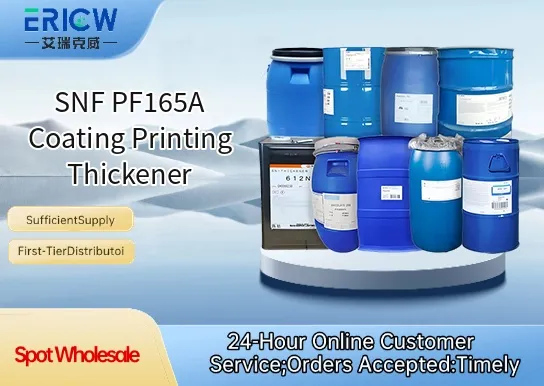
High-shear rheology modifier delivering excellent viscosity stability under mechanical stress during high-speed coating and printing.
Non-ionic, low-foaming formulation compatible with acrylic, styrene-acrylic, and polyurethane-based systems.
Enables precise rheological control—improves pigment suspension, reduces settling, and enhances film uniformity.
Low dosage efficiency: effective at 0.2–0.8 wt% in aqueous formulations, minimizing raw material cost and formulation complexity.
Excellent compatibility with common co-additives including dispersants, defoamers, and crosslinkers used in functional coatings.
Water-based textile printing pastes for reactive, pigment, and disperse dye systems.
Functional coatings for paper and board—e.g., barrier coatings, release liners, and decorative laminates.
Architectural and industrial interior wall coatings requiring sag resistance and brush/roller application performance.
Electrophoretic and electrodeposition primers where controlled viscosity and particle dispersion are critical.
Flexible packaging inks and overprint varnishes requiring high gloss retention and substrate adhesion.
| Chemical Type | Non-ionic associative polyurethane (HEUR) thickener |
| Product Form | Aqueous dispersion (40% active content) |
| Appearance | Opaque, off-white to light beige liquid |
| pH (1% aqueous solution) | 7.0–8.5 |
| Viscosity (Brookfield RVT, spindle #3, 20 rpm, 25°C) | 1,500–3,500 mPa·s |
| Primary Applications | Coating & printing formulations, especially water-based systems requiring high-shear thickening |
| Key Features | Shear-thinning behavior, low foam generation, excellent compatibility with surfactants and electrolytes |
| Storage Stability | ≥12 months at 5–30°C in sealed original container |
Q1: What is the primary function of SNF PF165A in coating and printing formulations?
A: SNF PF165A is a high-performance associative thickener designed to provide efficient rheology control—particularly enhancing low-shear viscosity, improving sag resistance, and delivering excellent print definition and film uniformity in water-based coating and printing systems.
Q2: Is SNF PF165A compatible with other common thickeners or rheology modifiers?
A: Yes, SNF PF165A is generally compatible with cellulosic thickeners, acrylic associates, and certain non-ionic surfactants. However, compatibility should be verified in the final formulation due to potential interactions with high levels of electrolytes, cationic additives, or strong defoamers.
Q3: How is SNF PF165A typically incorporated into a formulation?
A: It is recommended to add SNF PF165A during the let-down stage, preferably pre-diluted with water or co-solvent, under moderate agitation. Direct addition to highly alkaline or high-surfactant phases should be avoided to ensure optimal performance and dispersion stability.
Q4: Does SNF PF165A affect the drying time or gloss of printed or coated films?
A: SNF PF165A is formulated to minimize impact on drying kinetics and film appearance. When used at typical dosage levels, it generally maintains good open time without significantly delaying dry-through, and supports consistent gloss and surface smoothness across various substrate types.
Contact With Us:
E-mail: wangxingqiang@ericwchem.com
Have a Questions? Call Us:
Add:
Building A1, Jiete Industrial Park, Huangpu District, Guangzhou City, Guangdong Province, China