English
 Español
 tiếng việt
 русский
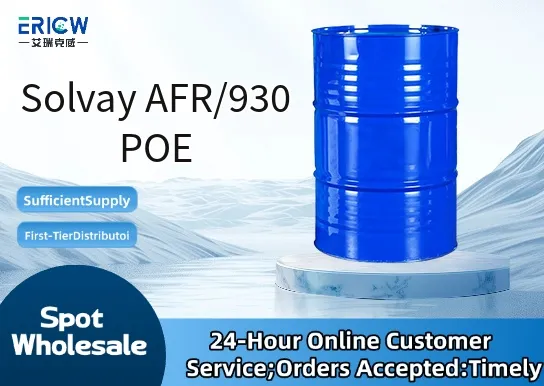
Highly stable polyolester (POE) base fluid engineered for demanding refrigeration lubrication.
Excellent miscibility with HFC, HFO, and next-generation low-GWP refrigerants including R-1234yf and R-1234ze.
Superior thermal and oxidative stability under extended compressor operating conditions.
Low volatility and high viscosity index ensure consistent lubrication performance across wide temperature ranges.
Hydrolytic stability significantly enhanced versus conventional POEs, reducing acid formation in moisture-prone systems.
Hermetic and semi-hermetic compressors in commercial refrigeration systems.
Lubricant for low-temperature cascade refrigeration units using mixed-refrigerant blends.
Primary lubricant in mobile air conditioning (MAC) systems transitioning to low-GWP refrigerants.
High-efficiency chillers utilizing HFC-32, R-454B, or R-513A refrigerants.
Heat pump applications operating under variable load and ambient conditions.
| Chemical Type | Polyolester (POE) synthetic lubricant |
| Product Form | Clear, amber liquid |
| Appearance | Homogeneous, transparent liquid without sediment |
| Primary Applications | Refrigeration and air-conditioning compressors |
| Key Features | Refrigerant miscibility, thermal stability, hydrolytic resistance |
| Benefits | Extended compressor life, reduced maintenance, compatibility with modern refrigerants |
| Viscosity Grade (ISO VG) | 32 |
| Base Fluid Origin | Synthetic, non-mineral |
Q1: What is Solvay AFR/930 POE and how does it differ from conventional plasticizers?
A: Solvay AFR/930 POE is a polyolester-based functional additive designed for high-performance polymer systems, particularly in demanding elastomeric and thermoplastic applications. Unlike traditional phthalate or adipate plasticizers, it offers enhanced thermal stability, low volatility, and improved compatibility with non-polar polymers such as EPDM, IIR, and certain polyolefin blends.
Q2: Is AFR/930 POE suitable for use in compounds requiring low-temperature flexibility?
A: Yes — AFR/930 POE contributes to improved low-temperature performance in elastomer formulations due to its low glass transition temperature and ability to maintain polymer chain mobility at sub-zero conditions. It is commonly selected for automotive sealing systems and outdoor infrastructure components exposed to cold climates.
Q3: How does AFR/930 POE perform under prolonged thermal aging?
A: AFR/930 POE demonstrates superior resistance to thermal degradation compared to many ester-based additives, supporting long-term retention of mechanical properties in applications operating continuously at elevated temperatures. Its hydrolytic stability also helps maintain performance in humid or cyclic thermal environments.
Q4: Can AFR/930 POE be used in food-contact or potable water applications?
A: Solvay AFR/930 POE is not pre-approved for direct food-contact or drinking water applications. Customers intending such use must conduct full regulatory evaluation based on their specific formulation, processing conditions, and applicable regional requirements. Solvay provides technical support for compliance-related testing but does not issue blanket regulatory endorsements.
Contact With Us:
E-mail: wangxingqiang@ericwchem.com
Have a Questions? Call Us:
Add:
Building A1, Jiete Industrial Park, Huangpu District, Guangzhou City, Guangdong Province, China