English
 Español
 tiếng việt
 русский
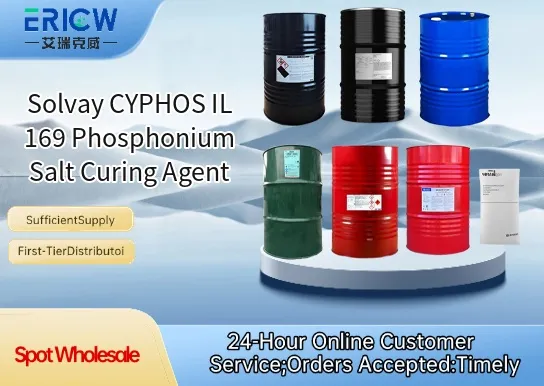
Highly efficient cationic initiator for epoxy and vinyl ether resins under ambient or mild thermal conditions.
Excellent thermal stability with onset decomposition temperature above 200 °C.
Low volatility and negligible vapor pressure, enhancing workplace safety and formulation handling.
Superior compatibility with a broad range of epoxy monomers and oligomers, including bisphenol-A and novolac epoxies.
Non-hygroscopic solid form ensuring long-term storage stability without refrigeration.
UV-curable and dual-cure (UV/thermal) coatings for industrial metal and plastic substrates.
High-performance encapsulants and potting compounds in electronics and power module manufacturing.
Adhesives for aerospace composites requiring low outgassing and high glass transition temperature (Tg).
Electrical insulation varnishes and impregnating resins for motors, transformers, and generators.
| Chemical Type | Triarylphosphonium hexafluorophosphate salt |
| Product Form | Free-flowing crystalline powder |
| Appearance | White to off-white solid |
| Primary Applications | Cationic curing agent for epoxy, vinyl ether, and oxetane-based systems |
| Key Features | Thermal latent, UV-initiated, non-nucleophilic, low migration |
| Benefits | Extended pot life, rapid cure kinetics, high crosslink density, excellent dielectric properties |
| Storage Conditions | Store in original sealed container at 5–25 °C, protect from moisture |
| Shelf Life | 24 months from date of manufacture under recommended storage conditions |
Q1: What is the primary function of CYPHOS IL 169 in epoxy resin systems?
A: CYPHOS IL 169 is a phosphonium-based ionic liquid curing agent designed to initiate and accelerate the thermal cure of epoxy resins, particularly in high-performance composites and encapsulation applications where low volatility, good thermal stability, and controlled reactivity are required.
Q2: How does CYPHOS IL 169 compare to traditional amine or imidazole curing agents?
A: Unlike volatile amines or thermally labile imidazoles, CYPHOS IL 169 offers enhanced thermal stability, negligible vapor pressure, and improved compatibility with hydrophobic resin matrices. Its ionic liquid nature supports homogeneous dispersion and enables tailored cure profiles through thermal activation without premature reaction at ambient conditions.
Q3: Is CYPHOS IL 169 compatible with common epoxy resins such as DGEBA and novolacs?
A: Yes, CYPHOS IL 169 demonstrates broad compatibility with standard diglycidyl ether of bisphenol-A (DGEBA), tetraglycidyl diamino diphenyl methane (TGDDM), and phenolic novolac epoxies. Compatibility and cure efficiency may vary depending on resin functionality and molecular weight, and formulation optimization is recommended for each system.
Q4: What handling precautions should be observed when working with CYPHOS IL 169?
A: As with many ionic compounds, appropriate personal protective equipment (PPE) including gloves and safety glasses is recommended during handling. Although it exhibits low volatility, avoid inhalation of dust or aerosols and minimize skin contact. Store in a cool, dry place under inert atmosphere if long-term stability is critical.
Q5: Can CYPHOS IL 169 be used in formulations requiring regulatory compliance for electronics or aerospace applications?
A: CYPHOS IL 169 is widely evaluated in high-reliability applications such as aerospace composites and electronic encapsulants due to its halogen-free composition, low outgassing tendency, and robust thermal performance. Regulatory suitability depends on the final formulation and end-use requirements; users should conduct full qualification testing per relevant industry standards.
Contact With Us:
E-mail: wangxingqiang@ericwchem.com
Have a Questions? Call Us:
Add:
Building A1, Jiete Industrial Park, Huangpu District, Guangzhou City, Guangdong Province, China