English
 Español
 tiếng việt
 русский
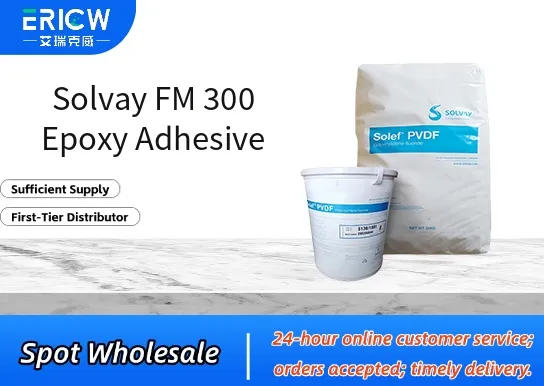
High-performance, two-component epoxy adhesive system with excellent toughness and peel strength.
Outstanding resistance to thermal cycling, humidity, and aerospace-grade fluids including hydraulic oils and jet fuels.
Low volatile organic compound (VOC) content, compliant with stringent environmental and industrial hygiene requirements.
Optimized for automated dispensing and controlled cure profiles—compatible with standard aerospace bonding processes.
Meets Boeing BMS 5-138 and Airbus ABR 4-2000 specifications for structural bonding applications.
Aerospace primary and secondary structural bonding—including honeycomb panel assembly and composite-to-metal joints.
Defense systems requiring high-reliability adhesion under extreme mechanical and thermal loads.
Commercial aircraft interior components where flame, smoke, and toxicity (FST) compliance is critical.
Spacecraft subsystems demanding long-term dimensional stability and outgassing performance per ECSS-Q-ST-70-02C.
| Chemical Type | Epoxy resin / amine hardener system |
| Product Form | Two-component paste (resin + hardener in pre-measured cartridges) |
| Appearance | Opaque gray paste (Part A), off-white paste (Part B) |
| Primary Applications | Structural bonding of composites, metals, and honeycomb cores |
| Key Features | Toughened formulation, low-temperature cure capability (down to 60°C), extended out-time |
| Benefits | Reduced assembly cycle time, improved impact resistance, superior fatigue performance |
| Cure Schedule (Typical) | 60°C for 4 hours or 90°C for 1 hour (post-cure optional) |
| Storage Conditions | Refrigerated at 5–10°C; stable for 12 months unopened |
Contact With Us:
E-mail: wangxingqiang@ericwchem.com
Have a Questions? Call Us:
Add:
Building A1, Jiete Industrial Park, Huangpu District, Guangzhou City, Guangdong Province, China