English
 Español
 tiếng việt
 русский
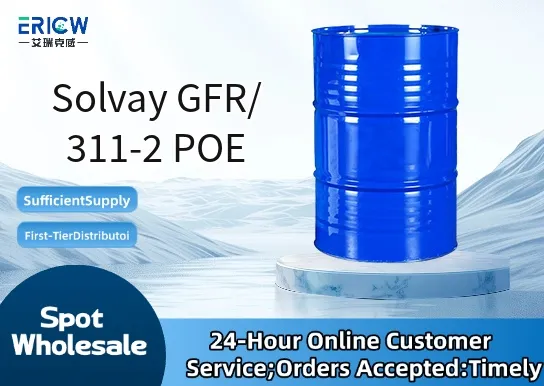
Highly stable polyolester (POE) base fluid engineered for compatibility with HFC, HFO, and next-generation low-GWP refrigerants.
Excellent thermal and oxidative stability under extended compressor operating conditions.
Superior miscibility with R-134a, R-1234yf, R-1234ze, and R-513A refrigerant systems.
Low volatility and high viscosity index ensure consistent lubrication performance across wide temperature ranges.
Hydrolytic stability minimizes acid formation and sludge generation in moisture-prone systems.
Mobile air conditioning systems using low-global-warming-potential (GWP) refrigerants.
Commercial refrigeration compressors operating with HFO-1234yf or blended refrigerants.
Heat pump units requiring long-life lubrication in variable-speed inverter-driven compressors.
Chiller applications utilizing R-134a or R-513A where enhanced material compatibility is critical.
CO₂ (R-744) booster system lubrication where POE stability and low volatility are essential.
| Chemical Type | Polyolester (POE) synthetic lubricant |
| Product Form | Clear, amber liquid |
| Appearance | Transparent, homogeneous liquid at 25°C |
| Primary Applications | Lubricant for rotary, scroll, and reciprocating refrigeration compressors |
| Key Features | Refrigerant-compatible, hydrolytically stable, high-viscosity-index POE |
| Benefits | Extended service life, reduced wear, minimized system contamination |
| Storage Stability | Stable for ≥24 months in original sealed container at ≤30°C |
| Compliance | Meets AHRI Standard 700 for refrigerant lubricants |
Q1: What is Solvay GFR/311-2 POE and how does it differ from conventional polyol esters?
A: Solvay GFR/311-2 POE is a high-purity, hydrolytically stable polyolester fluid specifically engineered for use as a functional additive in high-performance polymer systems. Unlike generic POEs, it features optimized molecular weight distribution and low volatility, enhancing compatibility with engineering thermoplastics and elastomers while minimizing outgassing during processing.
Q2: In which polymer systems is GFR/311-2 POE most commonly used?
A: It is widely employed in high-temperature engineering plastics such as polyphenylene sulfide (PPS), polyetherimide (PEI), and polyetheretherketone (PEEK), where thermal stability and long-term compatibility are critical. It also supports processing of filled or reinforced compounds, including those containing glass fiber or mineral fillers.
Q3: How should GFR/311-2 POE be incorporated into a polymer formulation?
A: It is typically introduced during compounding—either pre-blended with polymer pellets or metered directly into the extruder feed throat or melt zone. Due to its excellent miscibility and low volatility, it disperses uniformly without requiring high-shear pre-mixing or solvent dilution.
Q4: Does GFR/311-2 POE affect the mechanical or thermal properties of the final compound?
A: When used at recommended dosage levels, it generally maintains the base polymer’s key performance attributes—including tensile strength, impact resistance, and heat deflection temperature—while improving melt flow and reducing processing torque. Any influence on final properties is formulation-dependent and should be verified through application-specific testing.
Q5: Is GFR/311-2 POE compatible with common flame retardant systems?
A: Yes, it demonstrates good compatibility with both halogen-free (e.g., phosphorus-based and metal hydroxide) and certain halogenated flame retardants. However, interactions may vary depending on the specific chemistry and loading level, so compatibility screening under actual processing conditions is recommended.
Contact With Us:
E-mail: wangxingqiang@ericwchem.com
Have a Questions? Call Us:
Add:
Building A1, Jiete Industrial Park, Huangpu District, Guangzhou City, Guangdong Province, China